All posts by Princess Sparkle

Comedy, comment and overcoming procrastination. Julie Mac

I admire strong Victorian women like Vali Myers, Chrissy Amphlette, Joan Kirner and Phryne Fisher. Women with attitude. I found Catherine Deveny in late 2009 when I read her Doncaster/Manpower column on The Age website and I frowned thinking, ‘Who is this woman? She is brutal.’ A peek at her website displayed an attractive brunette with red lippy and matching sequined dress. My kinda gal. This thought was further confirmed when I spied her in another fabulous red dress at the Melbourne Writers Festival, with a pack of admiring males tripping over themselves to keep up with her glamorous stilettoed stride from BMW Edge to the book signing table in the Atrium at Federation Square.

The resilient women that grow up in our bluestone suburbs of hard knocks are interesting and fascinating, so I signed up for Comedy, Comment and Overcoming Procrastination, ready to sit back and be entertained by this Reservoir chick.

During the round-the-table introductions, somehow Catherine individually probed our souls with a laser sharp skill that revealed our genres and then with a Jedi like mind trick, commanded us to complete 1000 words for the next session. 1000 words, or don’t bother coming back!

Using secret subliminal trigger words like schooligans, turdlock and corporate maggots, there was not one grumble from the stunned participants (aged from 20 to 70) as we were given a high voltage jump-start to write ˜ ‘Write in the nude’, and ‘Sing from the heart’‚ ‘Go on a random creative adventure with no fixed outcome’‚ other than to work on our ‘writing fitness’.

We received our orders. Write first. Write before morning coffee, write before your shower and with other tips on smashing the obstacles of procrastination and rude domestic interruptions to our creativity, every writer easily met the challenge and captured their 1000 words. Our reward? The punishing task of reducing our masterpiece to 500 words.

It was then I realised that calling the course Comedy, Comment and Overcoming Procrastination was a trick to semi-imprison me in a Writers‚ Boot-camp with a literary dominatrix. I couldn’t wait to go back for more.

Julie Mac is the author of RAGE A Sharpie’s Journal Melbourne 1974-1980‚ and the contact for Williamstown Writers‚ Group and membership officer for Authors Australia Inc. for independently published writers.


Go Back

Eating The Neighbours Pets. Lucy Graham

Pedro is eating our neighbour’s pets. It’s happened twice now. The first time he scooted through our legs at the front door, sprinting past five minutes later with a glossy black fowl in his jaws. And he kept running. We had no idea where he’d caught the chook, or what he did with it.  And we weren’t inclined to start knocking on doors.

We returned home to Melbourne and dined out on the story. We salved our consciences by concluding the chicken had it coming – it must have been out of its pen after all. Many people were shocked. But Pedro is a Labrador, they pondered, he is so friendly – how could he? Some children refused to pat him despite his waggly tail. Everyone nodded soberly when urged to shut the front door.

Months later we were back at the beach house. I returned from a massage to a flutter of brown and white feathers by the front door. My bloke broke the news. He told how the distressed owner and her pre-school child had followed Pedro home. How Pedro had crunched on his prey as they talked. The chooks were more than a source of eggs, she said, they were the kid’s pets. How the child had looked at our dog. Our dog, eating her pet. 

We were ashamed. Our vegetarian son was mortified. Our offer to pay for new chooks was declined. Pedro was banished to the back yard, and what was left of the unfortunate bird deposited in our wheelie bin. My massage, negated.

Veterinarians are increasingly offering yearly checkups to chooks as suburban ownership increases. After initially getting chooks for their laying power, many people develop an attachment, keeping their brood for years after they have stopped laying.  

Live poultry sales to suburban and inner-city households have been doubling in past years, and local council laws typically allow 5-10 backyard hens without registration fees.

Backyard poultry advocates Aussies Living Simply say, “a chook is a pet who pays board”. They say the benefits of keeping hens can’t be measured by egg production alone, as hens eat food scraps and garden bugs, fertilise the garden, and provide companionship and entertainment like other household pets.

“The costs of having your own backyard chooks or other poultry is negligible when you know that the egg they have given you is from a known and trusted friend, for simply giving them a good life and home,” says one member.

But any inclination I had to keep a few hens is now thwarted. Our accidentally free-range dog has developed a taste for free-range poultry. He is canis lupus, a descendent of wolves, an instinct we’ll never override. When he runs free again, and it’s only a matter of time, we’ve promised to run and shut our neighbour’s gate.

We have no right to be mortified, we omnivores. This very moment people all over this globe are hunting their own food. Food they will kill by their own hand, then skin, gut, and cook or eat raw. So while we tut-tut about my dog Pedro, we need to face the fact that our lunch today is what someone else has killed on our behalf. Bon appétit!


When she’s not nurturing her fledgling freelance writing enterprise, Lucy Graham can be found working as a casual relief teacher in a local primary school.

She writes and reviews regularly for Stage Whispers, and has been published in The Age, Brisbane Times, Leader Community Newspapers, Webchild, and Readers Digest. Her blog, matters of life, casts a broad brush over personal writing interests.

Passions include print media, children’s and young adult literature, music theatre, movies, AFL (Go Dons!), walking on the beach, getting groups to sing together, lively conversation, and asking ‘why’. She cannot abide the terms ‘loser’, ‘who cares’ or ‘whatever’, and relishes her black-sheep status.

Lucy has a B.Mus degree, Grad Dip in Education (secondary), Grad Cert in Children’s Literature, and an MA (Writing and Literature). She lives in Melbourne’s burbs with her bloke, three kids, and labrador whose previous penchant for eating socks has been replaced with a chicken fancy.

Go Back

Visit Palestine – so where the bloody hell are you? By Michelle Coleman

“I would not do that if I were you,” says Maha tightly, as I reveal a small camera. She has generously offered to guide me from Bethlehem to the Old City in Jerusalem for a day of shopping, via one of the main Israeli check points, and her tone indicates a small betrayal.

Around us is a hard press of olive-skinned Palestinians, eight deep and two-hundred strong, waiting in unnatural silence. They are dressed cleanly, modestly and in dark shades. Most are somber-faced men. Some of the women have their heads covered, many do not. A few tote children, taking care to keep them quiet.

High above in the ceiling void stamp two Israeli soldiers on a steel grate. Their footsteps echo harshly in the small hall. They brandish assault rifles at their hips and yell down a flood of angry Arabic, herding us through barriers seemingly designed for cattle.

Abruptly, the checkpoint is shut. A mutter of discontent stirs through the crowd. I desperately want to film but I stow the camera at Maha’s words; exposure would place her under unnecessary scrutiny.

She is a child of the occupation and speaks flawless Hebrew – self-taught by watching Israeli cartoons – as well as her native Arabic. Making me feel even more inadequate, she is also fluent in English and German. She is calm and cynical but not bitter. An Arab, she has the slim face and stately nose of a Palestinian but unusually green-grey eyes and light brown hair curls she wears in a careless ponytail, which combined with her smooth Hebrew will have mistaken for an Israeli once in Jerusalem. It is a mistake she rarely bothers to correct. She moves seamlessly between two cultures and in an ideal world her skills would be utilised for reconciliation. Instead, the fragility of the Palestinian economy means she is lucky to work part time in hotel reception.

Today, she hopes to indulge her obsession for handbags, spices and her profound need to walk in the Old City. Her newly approved papers are valid for just two weeks and work commitments mean she can cross twice in that time, provided nothing goes wrong.

Above us, the soldier waves the assault rifle – a weapon that appears designed for a rapid burst of effectiveness rather than accuracy. He hovers four metres above us on the metal grating, and the weapon slung at his hip is angled down by default, waving disturbingly in our direction. We stand shoulder to shoulder so there is no way to evade its arc.

Belatedly, I notice he is not the archetypal Israeli army man; he has intensely black skin and his Arabic sounds heavily accented compared to the dialects I have been hearing.

 “Is he African?” I hiss.

“He is an Ethiopian Jew. They get the worst jobs in the army.”

My bemusement shows and Maha nods to the sea of Arab faces behind her.

“Their grandmothers and grandfathers are from here, their families for generations. They don’t understand either.”

We arrived early to beat the crowds and after nearly half an hour are nearing the front. However, the soldier is ordering a swathe of us to move to a small gap on the left and effectively out of the queue. I move to obey but she grabs my arm.

“No, it is our turn. Do not step out.”

Around us, others refuse also.

“What is happening?” I whisper confused.

“That man,” she nods to a Palestinian with an ugly expression less than a metre from us, explaining why the soldier’s gesticulations with the rifle are centering on us, “has pushed through from the back. They want him to step out.”

The Palestinian sneers defiantly, chin raised, as though others should be proud of his show of resistance. It begins a standoff. I wait nervously, expecting the soldier to enter the crowd however he remains on the steel grill. It soon becomes clear the Palestinians are expected to expel the leering man from their own ranks.

The atmosphere is volatile. Eventually, someone will have to do something. And that is how we wait for fifteen minutes until, eventually, someone does.

_____________

 
I am in the West Bank because I am Palestinian-Australian and in response to ‘Visit Palestine’, a humanitarian tourism campaign. And despite the nightmarish situation in places like Gaza and Hebron, the campaign is underpinned by a surprisingly robust events calendar.

In addition to a myriad of religious tours to breath-taking vistas such as the Holy Sepulchre, an eco-tourism market is burgeoning with initiatives such as ‘Walk Palestine’ and ‘Ride Palestine’. In Ramallah you can order a soy latte that would be considered great in Sydney and good in Melbourne. The dirty urban gallery of the Separation Wall features thousands of graffiti works, including many by Banksy. Staggeringly, there is an Oktoberfest, held annually at the West Bank’s only brewery, and, in a strategic masterstroke, The Palestinian Festival of Literature is toured through the labyrinth of checkpoints to a people increasingly unable to travel; the mountain going to Mohamed so to speak.

Yet just as important is experiencing the oppressive checkpoint bureaucracy that Palestinians suffer daily. The check points are ostensibly a security measure that also slows and prevents human movement and subsequently the Palestinian economy.

So even as I question my presence here in Bethlehem, I remain fascinated by the standoff which is eventually broken by the outrage of a man immediately on our right. He is tall, early 30s. Stubble and bags tell a story of near exhaustion however he also has an air of authority.

Suddenly we are in the middle of a loud verbal altercation, the gestures and demands of the two men too quick and too close for Maha to translate. It makes depressing viewing; one Palestinian man imbibed with a natural and ugly violence, the other forced into a confrontation he did not seek but is compelled to end.

Maha tenses, her agile mind most-likely plotting a rapid response for us both. Around us, deep in the throng, Palestinians hold themselves taller, poised like deer. Their awareness has shifted from the soldiers to the immediate threat among us.

At first queuing was like playing a game, being part of a resistance, now I realize how quickly things could go sour given we are within an arm span of both men. The only exit for the 200-strong crowd is back through a two-person wide steel and barbed wire tunnel to the outside.

There is a shift in power and under the increasingly violent gesticulations and outraged demands of the authoritative man the sneering Palestinian finally concedes ground.  

The checkpoint reopens and the queue surges forward, yet almost immediately the leering man who was the reason for the closure pushes before Maha and I, beating us to the checkpoint. The soldier watches wordlessly, rendering the tension of the last fifteen minutes pointless.

On the other side of the checkpoint, under grey skies I sigh with relief.

Maha has long forgotten the incident. She smiles, misconstruing my concern.

“Forty-five minutes. That was actually quite quick.”

By day Michelle Coleman works high in the trees at a zip-trek park in the Dandenongs, but by night she freelances and writes teen fiction, which she hopes to have published on day. She thinks you can learn a lot about a person by their favourite books; hers are Vernon Gold Little, Miss Smilla’s Feeling for Snow, The Catcher in the Rye and the Harry Potters. If you haven’t read them, don’t tell her because she will insist you share the experience. She recently gave up caffeine only to find she still maintains a raging coffee-shop addiction. Her bandwagons include human rights in the Middle East, dying with dignity/Exit International and removing religious teachings from school curriculum. She enjoys rock climbing with her partner Paul and endlessly tormenting him. 

michelle.coleman_melb@hotmail.com

Go Back
Are We There Yet. Katy Hetherington

For the past 32 years, I’ve driven on the freeway of life at 100km/hr.

Sometimes, I’ve exceeded the speed limit. But, thankfully, I’ve never lost any demerit points. Other times, I’ve screeched to a grinding halt – going nowhere on the Monash ‘car park’ with no option other than to toot my own horn, along with the rest of them.

I’ve always been a high achiever, exceeding expectations and trying to please those I look up to. In the process, however, I can’t help but think I might have forgotten to please myself. 

We moved around a lot when I was young. So sitting in that preverbal traffic jam now makes me just a little anxious. I just want to move forward to get to my destination! I can’t help it, I’m impatient. I want to get to the place where I can slow down to 50km/hr, use my cruise control and be happy.  But what is it that will make me happy? Perhaps I should continue burning some rubber until I work it out? When I take my Mum out for a spin (she doesn’t drive), she keeps telling me to slow down and live in the moment, while she hangs onto the ‘Jesus rail’ for dear life. I tell her: I know what I’m doing, you’re not in the driver’s seat!

I went through high school aiming for an ‘A’ in class…and was terribly hard on myself on the rare occasion that I got a ‘B’, or God-forbid, a ‘C’. At university, I did a double degree over four years and aspired to, and achieved, a Distinction average.

Straight from uni, I went into gainful employment. While friends were living it up working in London, bar tending in Lisbon, or teaching English in Tokyo, I accelerated up the career highway here instead. I clocked up some good mileage and pimped my ride a number of times. Fortunately I was sensible enough to ‘do the right thing’ and took a pit stop every so often at those Driver Reviver sites to avoid crashing out. After my power nap, my coffee and Kit Kat, I’d be able to carry on refreshed. Although in taking a ‘break’, (and thus breaking the seal) waiting for the next toilet stop always seemed like an eternity.

I worked really hard at being an excellent driver, even when challenged with bumps in the road, bird shit on the windscreen and dick-heads in the back seat.  Fortunately, I had mostly a smooth ride. But I can’t help that secretly wish I was riding in a red convertible: loud music, cruising smoothly along the California coast line with a very hot man. In reality, I first settled for a white, 1987 Mitsubishi Colt that had trouble climbing up Wellington Road. I’m a pretty realistic girl, though, and would never expect to jump into a flashy car before I earn the privilege.

I was proud of my work and my achievements, but after ten years of cruising along the communications highway; working for, and along side, the big wigs, Mayors, Presidents and tinpot Hitlers, I decided that my vehicle was starting to look knackered. It was overheating and needed a bloody good service before I ventured along the toll road, no turning back and no way to get a refund.

I slammed on the breaks and swerved into the emergency lane. I, again, came to a grinding halt – this time not due to a traffic jam or a car crash. Had I not made the decision to stop myself, I feared that someone else might have made it for me. Exhausted, I called the RACV and got myself towed. I climbed into that tow truck (leg-lifted up ‘cause I’m only 5’ 1”) and was finally up high enough to see things from a different perspective, instead of lying spread-eagled on the asphalt of despair.

So, just for now, I’m at the mechanics. Not the scrap heap. And I’m nowhere near the stage where I’m going to offer someone 20 bucks to take me away. I’m taking some time out for a career tune up. I’m sure you’ll agree that’s a reasonable investment.

My mechanic told me I forgot to put water in my tank. I needed to top up my antifreeze. I’ve got a few scratches that need polishing up. Yet I’m very fixable and it shouldn’t cost too much to repair.

For the next few months, I’m taking the time to do things that I’ve always wanted to do. I’m already starting to feel calmer, happier and excited about what’s next.

I’m even planning on taking that ride down the California coast for real… and when I drive over those hills and come out at the other side, I want to feel that I can take on anything again. I’m going to be ready to accelerate up the career highway with new enthusiasm and a fresh look on life.

Who knows, this time, I might even decide to take a different route.

Katy Hetherington is a writer and communications professional from Melbourne.

After 10 years working in media and communications for a range of corporates and not-for-profits, she’s taking a well-earned career break. In between travels (California, New York!), she’ll be seeing what it’s like to sleep in, freelancing and getting her social life back on track… before starting her next chapter in full-time working life.

Katy’s extensive writing experience includes corporate and speech writing, music and theatre reviews, feature articles and opinion pieces. After a stint at InPress magazine during her uni days, Katy’s looking forward to getting back into writing creatively and being a published writer again.

After doing the course at the Vic Writers’ Centre, Katy was inspired to start up her own blog http://ladywritermelb.tumblr.com You can also follow her on Twitter www.twitter.com/LadyWriterMelb

Go Back

Grandfather, History and Me by Jason Taylor

I struggle to recall exactly how I first became interested in history.  Maybe it was a continuation from an earlier interest in skyscrapers and cities; from the date of a building’s construction or a city’s foundation to their stories through time.  Or it might have been something at school that sparked it off, either in class or by reading something in the school library.  Whatever the case, it was my grandfather – my mother’s father, I never knew my father’s parents – who was the probably the greatest facilitator of my interest when I was about six or seven years old.

 A retired public servant (worked in civil aviation) in his eighties, my grandfather was very smart and was very sharp of mind.  Mum has often boasted that it was definitely from her side of the family from which I inherited my intelligence.  He designed and built himself the four-bedroom, white-weatherboard house in the bayside suburbs of Melbourne where he and Grandma would bring up their four children.  An amateur historian, he sent letters on matters of historical interest off to publications and in his old age researched the family history.  A writer, he composed a poem or two, contributed to the industry journal, and wrote an unpublished account of a road trip to Queensland that he and Grandma undertook soon after his retirement.    Unfortunately despite his intelligence and his thirst for knowledge and learning, he never had the opportunity to go to university.  Back in the 1920s, higher education of that sort was the privilege of the wealthy, not of a son of a butcher.

   In one of the three spare bedrooms, my grandfather kept his library.  The two metre high and six metre long bookcase (which he had constructed himself) contained a cornucopia of knowledge.  There were books of any age, topic and type: early editions of Dickens; political tracts by Paine and Machiavelli; nineteenth-century antique encyclopaedias in the volumes of which were inserted notes, pamphlets and newspaper clippings of subjects that he’d found interesting; souvenir books of the Melbourne Olympics and the Coronation of Elizabeth II; bibles and prayer books; books, books and more books!!! To a seven year old used to a primary school library that contained mostly picture and short easy-to-read books (apart from the mandatory World Book Encyclopaedia set and Guinness Book of Records), it was the Great Library of Alexandria! 

My grandfather also had a huge collection of Parade magazines that I was especially attracted to, as it was filled with stories of people and events from history.  I would read, absolutely enthralled, about Ned Kelly, Alexander the Great or some now little-known nineteenth-century colonial war.  Unfortunately, I wasn’t allowed to read them too often, as he was concerned that I would mess them up.

He also owned some very cool objects including a piece of rock from Mt. Erebus, and a small fragment of masonry that he had chipped off Hadrian’s Wall.  I was also told by my mother of a musket that was supposed to have been stored somewhere in my grandparents’ garage.  Wow I thought, an actual musket!!!  I imagined it being used by a redcoat fighting in the Napoleonic Wars or some other ancient conflict that I had read about.  It was a part of history; I wanted to see it, touch it and even – in the hope there were also musket-balls and gunpowder – to fire it.  I asked both my grandparents often about the musket, but they couldn’t remember where it was.  Years later, I found out that the musket had disappeared long ago.

  Recognising my interest, my grandfather encouraged it to the fullest.  In conversations with him, I was fascinated as he talked about Australian and British history and the famous people therein, like John Curtin, the Battle of Hastings, or the opening of the Sydney Harbour Bridge.  I thought of him as the venerable old sage that you encounter in fantasy or adventure stories (or movies).  The one whom the hero (or heroine) would visit to discover the significance of an ancient artefact, to find a certain spell or herbal potion, with the old man needing to reach into the depths of his large in-built knowledge, or failing that trawling through his collection of very, very ancient books.   

Every birthday and Christmas, my grandfather always gave me a book on history that not only broadened my knowledge, but also helped to build a small library of my own.  He would also encourage me to watch historical documentaries on TV.  That was how I first learnt about the Titanic, and as a result developed a mini-obsession with the doomed liner, which thankfully petered itself out long before an idea for a movie on the disaster germinated inside James Cameron’s head.

In May 1994, my grandfather passed away in his sleep at the age of eighty-eight.  His ashes were sprinkled on the grave of an ancestor on whom he had spent a great deal of time researching.  Therefore, he never saw his grandson go to university, and complete an honours and then a masters degree in a discipline that he had treasured.  Undoubtedly he would have been proud of my achievements.

Jason Taylor grew up on the Mornington Peninsula and completed an M.A. in history at the University of Melbourne (after a dual Arts/Science degree and Arts Honours at Deakin).  Devotees of public TV game shows, might remember (yes, MIGHT) him from his somewhat successful stint on Einstein Factor in 2008, becoming a series finalist (‘Kings and Queens of England 1066-1714’, if you really want to know what his special subject was), and a rather disastrous appearance on ‘Letters and Numbers’ (the less said about that the better).  Living in Melbourne’s bayside suburbs, he is a sometime member of the Mordialloc Writers’ Group, contributing a piece to their 2009 anthology ‘Carnival Capers’.  He wrote his first two books at eleven on the French Revolution and King William III of England, has written a couple of yet-to-be published short stories, and is currently undertaking a long, slow, frustrating attempt at a memoir.  A cricket aficionado, he is a regular writer of match reports for his cricket club’s e-mail newsletter.  His twitter account is @jasejtaylor.

Go Back

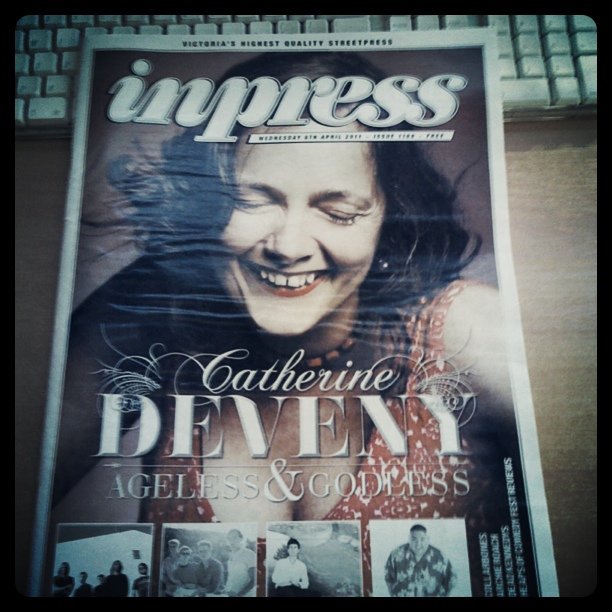
Border Security. Wot Cuns.

Do you like dogs? Have any people skills? A thing for rubber? Then your country needs you.

AS WE ALL KNOW, I’M not a proper television reviewer, but I did pretend to be the other day by checking out the ratings. As I scanned the national top 20: It Takes Two, 60 Minutes, Where Are They Now, Seven News, I despaired. But I was, at the same time, a little smug. “Yes, well that’s what the bogans are watching.”

(Which reminds me, I received a letter from Joan, of Myrtleford, asking me to explain what a bogan is. So I will. There is a scientific equation to determine precisely whether you, or someone close to you, is a bogan: if your television is wider than your washing machine you are a bogan. The people who live over the road park their television in the driveway between the trailer they use to transport their Rottweilers to dog shows, and the carton of fags their 12-year-old smokes. They are bogans. And the bigger the telly, the bigger the bogan. OK, that’s sorted.)

Border Security is the most watched show in Australia, with almost 2 million viewers. Mostly bogan. How do I know? I don’t. I’m just guessing. But the bogans over the road are big fans. So I gave it the Deveny Three Episode Treatment.

Talk about putting the sizzle back into cavity searches.

Thousands of men and women dedicate their lives to protecting Australia’s border and after watching three episodes of this documentary/advertisement/propaganda I started thinking, “Who would want to be a jet-setting rock god, a Hollywood megastar or a secret agent of international espionage when you could work in customs?”

Hey, thrill seekers? Tried ice climbing, base-jumping and skydiving? Looking for a new rush? This program turns working in the public service into an extreme sport. It’s more than, “Did you pack your own bag?” It’s fully sick.

Border Security gives the viewer, or in my case, the piss-taker, an opportunity to take a peak under the bonnet of the Australian Customs Service, and it is fascinating. The show pumps the whole business up with a soundtrack heavy on cock-rock, not that it needs any more excitement, it’s adrenalised enough.

The show is alarming and comforting at the same time. It’s, “Alert! Alert! Funny coloured people who don’t speak English being dodgy trying to rip us off blind,” on one hand, and then, “But don’t worry the Government has it all under control so just sit back, watch McLeod’s Daughters and relax. We have everything under control”. It’s cops and robbers. It’s good versus evil. It’s us and them.

This show should be called Sprung Bad. Drugs mules, exotic snakes, illegal workers and a mental case throwing his false teeth at the Customs officers when asked to pay the duty on a slab of fags, all sprung bad. The drug dogs are clever, the customs officers are big on hunches and an overly chatty passenger is asking for some personal time with Mr Rubber Glove. Probably safer to just stay home.


Go Back

Robert Doyle. Melbourne Lord Mayor. All ambition. No talent.

SATURDAY? What a ride! The kids were beside themselves. Every morning for months I’ve been woken at some ungodly hour with “Mum! Mum! How many sleeps until the council elections. Is it 87? Are we there yet? Stuff Christmas. We’re gagging to find out who’ll be elected councillor for the North-West Ward. If we’re good, will you read us the campaign pamphlets? The independent candidate’s proposed innovation to the current animal registration system and the maintenance of footpaths are fully sick!”

How about that Robert Doyle? Old Popeye is King of Melbourne. I can’t imagine how honoured he must be that the people have spoken and what they’ve said is, “You’re the only name we recognised on the ballot. Didn’t you used to play for Carlton?” I was thrilled to hear a middle-aged, middle-class rich bloke in a suit won the mayoral bling. There just aren’t enough of them in highly paid ceremonial roles that consist of hand-shaking, ribbon-cutting and posing for photographs with visiting local dignitaries.

Doyle is proof of the impossible. That someone is more pompous, soporific and uninspiring than Ted Baillieu. The Liberal Party leadership handover from Robert to Ted was the Born to Rule dream-team; White and Whiter; 100% charisma-free, idea-resistant and void of all traces of originality or your MCC membership back!

Becoming lord mayor is the consolation prize for power-trippers with ambition but no talent. The gig’s made all the more cushy by virtue of the fact that you have no real responsibility whatsoever. The council’s only recent idea has been to put a beach on the Yarra. Like the city doesn’t have enough syringes. Sure Melbourne has the Paris end of Collins Street. But we also have the Congo end of King Street. How about tackling that or at least changing the name of the strip club Spearmint Rhino to something not about bad breath and fat people?

Robert Doyle failed as opposition leader not just because he led the Liberal Party to its worst-ever defeat, but because he’s devoid of any original ideas, insight, leadership skills or warmth and he has no connection with the needs of anyone other than his mates from Geelong College. I’m looking forward to watching him fail at being mayor. Which will be pretty astonishing considering the job’s such a joke that no mayor has ever failed or succeeded at it. All you have to do is show up and not kill anyone and you’re referred to as “The Honorable”.

Doyle wants to reopen Swanston Street to cars, ban bad buskers and stop the city being a bogan magnet. Firstly, Swanston Street and the cars. Where do I start? You’re an idiot, Doyle. Secondly, bad buskers? They’re all bad. That’s their charm. If they were any good, they wouldn’t be busking. As far as stopping the city being a bogan magnet, what’s your plan? Bogans have to get out and about. If they don’t, they’ll breed. How about a bogan-proof fence that redirects bogans to Hawthorn! Watch out Sally and Jonathan, lock up your Southern Comfort.

It seems Doyle wants to turn the clock back to 1959, when Ava Gardner was wrongly reported as saying, “On the Beach is a story about the end of the world, and Melbourne is the right place to film it.” Next thing you know, the six o’clock swill will be back, babies will be taken away from unmarried mothers and doctors will again smoke on their ward rounds.

The only mayor we’ll ever remember is John So, because he was cute and he talked funny. He was so adorable I had a fluffy toy of him hanging from my rear-vision mirror. When I pressed its tummy, it sang John So, He’s Our Bro. Don’t get me wrong, he’s a nice guy. But let’s face it, potato-cake munching, tram-riding, pot-swilling, hook-turning, cantaloupe-buying, latte-sipping, bathers-wearing friends, he was more a mascot than a mayor.

I’ll miss his TV ads with Livinia Nixon. It was like a confused Asian businessman being led around Melbourne by his translator. As Livinia spoke on his behalf, John So looked like he just wanted to hit the casino, play golf and buy opals.

John So then Robert Doyle. If that doesn’t prove Melbourne is Australia’s comedy capital, I don’t know what does. I’m looking forward to lots of laughs. This is the best joke since more than 70,000 people put their religion down on the census as Jedi.

And you might want to read this.

Go Back