Category Archives: Gunnas-Masters

THE CARK FILE – Helen McGowan

Another brilliant piece from a GUNNAS WRITING MASTERCLASS writer.

Practicing law can harden you against life’s vicissitudes. Through the vicarious exposure to the lives of others, a lawyer’s survival depends on developing a carapace to insulate us against others’ misfortune. After a while, if we find we are suited to legal practice, we may develop an appetite for dealing with life’s difficult issues. Dealing with death is one of these difficult issues which has both hardened me and given me an appetite for dealing with the difficulties death presents.

When our clients share their frailty or death with us, we want to ‘fix’ the fall out. We see the consequences of human behaviour and we begin to believe, that with foresight and planning, problems can be avoided. Perhaps this is a delusional belief. Perhaps instead life is not to be ‘fixed’ and that difficulties are integral to life’s journey. But lawyers have the benefit of having shared many experiences of things going wrong. Through hindsight we can be seduced into thinking that there is a ‘right’ way to do things, and that lawyers know what that ‘right’ way is. Having a ‘cark file’ is one of those tools which uses the experiences of others, to avoid future difficulties.Hele

The ‘cark file’ is one tool which lawyers use to forestall disaster. The cark file is a practical approach to getting your affairs in order. In one place, you gather the information which will guide your friends and family, when you are no longer able to tell them your wishes. The cark file contains all the information your family or friends need. The cark file helps both before and after death. Under what circumstances would you wish your life to cease? What do you want to happen to your body, and your possessions when you ‘cark it’? What would it take for you to ‘have the conversation’ with your family and friends? Get ready for the conversation, write up your Will, nominate an enduring attorney as your ‘responsible person’ to make decisions when you are unable to do so and save your loved ones some trouble.t of coping with.

Helen practices law in Beechworth and Yackandandah.


Go Back

Netball skirts and tracksuit pants – Amanda Fong

Another brilliant piece from a GUNNAS WRITING MASTERCLASS writer.

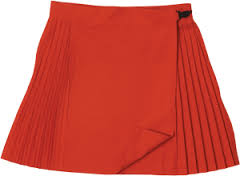
Netball skirts and tracksuit pants. A match made in heaven. To my eight year old self they symbolised community, domesticity, vitality and motherhood.

It was the uniform of suburban mums back in the 1980s. Active mothers moving from drop offs to shopping centres to netball matches to pick-ups to after school sports. To me it was a uniform for the majority, a majority that I so desperately wanted my mother to be a member of.
Much to my dismay my mother never donned a pair of track suit pants. Or a netball skirt. Let alone together. My mother has a serious aversion to trainers, sneakers or flat soled shoes of any kind. On the one (short lived) occasion she wore a pair of shiny white, cushioned Reeboks (it was the 80s), she declared that the shoes were the most uncomfortable things she had ever worn and quickly retreated back into the apparent comfort of her pointy ended, high heels, never to return to a shoe with a mild incline again.

My mother rarely picked me up from school because she ran a jewellery shop in a quiet suburban shopping centre. It was small but glittered with its sparkling jewels and affordable time pieces, in sharp contrast to its fluorescent lit neighbours. But when she did I’d anticipate her arrival with nervousness and a degree of dread. Amongst a sea of netball skirt and track suit wearing mothers,  she would arrive like some sort of Chinese Joan Collins – bold matte red lips, black sweeping eye liner, a freshly coiffed perm, patent pointy high heels, a replica Chanel suit and then layers upon layers of sparkling, eye catching merchandise from her shop.
As one of the few Asian children at my predominantly white suburban primary school, standing out wasn’t something I prized. I wanted to move with the crowd unnoticed, be one of them, to conform, to fit in, to be less Chinese. But her arrival was akin to watching a peacock amongst a sea of pigeons and her conspicuous arrival drew unnecessary attention to me.

For years I tried to sell the virtues of pairing a netball skirt with tracksuit pants to my mother. I’d preach its versatility, how its unique combination of elasticised waist with gentle pleats was the height of sophistication and comfort. But she never budged, never to be familiar with leisurewear let alone active wear.

30 years on and facing the prospect of my first school run next year, I can finally appreciate the stubborn determination of my mother to maintain her red lipstick, weighty jewels and Dynasty-style outfits. It was her way of maintaining a sense of self, of identify, of carving out an image of motherhood that reflected her pre-child self in the face of routine and predictability.

Contact: amanda.fong@gmail.com

Go Back

Realignment – Jemma Morris

Another brilliant piece from a GUNNAS WRITING MASTERCLASS writer.

As I start the engine I catch the start of the ABC five pm news. I feel like I have been locked away from the outside world for the day while at work when they are discussing the major announcement by our Prime Minister that morning. According to the report, the Federal Government has decided to allow in an additional few thousand refugees from that latest humanitarian crises overseas. ‘About bloody time! Why in hell is it so difficult to make a decision that is the bleeding obvious right and decent thing to do for once!! ?’ I yell at the radio. This issue has really upset me over recent days. I even fought with Stu about it on our way to the movies on Sunday night. The night before he flew off. Bloody bureaucratic decision making. After sitting through a staff meeting where it took an hour to finalise a new pro-forma for incursions, I have a head ache. I have drunk too much coffee, haven’t drunk enough water and forgot to change that tampon before I rushed out of the office in my flurry to get Sam from day care in time and get the big boys to basketball. I realise, once again that I am getting angry about a whole lot of stuff lately. While some of it is valid and I know it is all well and good to care deeply about some of these big issues in life, I am tired. I’m tired of feeling angry about so many thigs going on around me that I feel I have no control over.

I sense something that jolts me out of that contemplative zone and pull up for the red light just in time. I haven’t hit the Subaru in front but it as close. I realise that I’m not concentrating and really need to focus on what I’m doing. With a good half hour of the trip left, I decide that I need to relax a little. I turn the radio of and switch to an old CD.

My shoulders relax and my breathing slows down as the smooth tone of The Waifs envelops me. Slowly but surely, it takes me back. Freo. Through the music I almost catch the scent of those sticky sweaty evenings that comes with the feeling of carelessness and freedom that only Western Australia seems to offer.

I truly love my job and could not think of any other work I’d run out the door for so eagerly each day. However, it drains me. Stu is away at the moment on one of his long term contracts out of Kalgoorlie and it just adds that bit of extra pressure that makes the start and the end of the day so much harder to manage. I’m pretty sure so many judge us for ‘doing it for the money’ and think the strain during these stints away is something we selfishly choose at the expense of our children. But why should I have to stay at home all day each day while he pursues the job he needs and enjoys? Why should one of us choose? Our kids are more independent and resilient than many others I know and they know and understand that both of their parents work hard because they each enjoy their jobs and contribute to the family. I feel the stares when I occasionally make it for school pick up or assembly. Maybe they are just in my head and an inaccurate perception but I’m pretty sure the ‘I just don’t know how you do it?’ comments do often carry a double meaning.

I eventually come around the corner past the kids’ school before I turn off to day care and see the road lined with cars. Shit. What are they all here for still at 5.45? My mind races back to that blur or school emails. Was there something about an information session or was it parent teacher evening today. Oh shit, shit, shit. I pull over and ring Stu in WA.

‘Honey, can you please check the old school emails and check to see if there was something about parent-teachers’. He’s on site in an office and reluctantly logs on to our home emails, while filling me in on the latest mix up with dozers and overestimated tonnage for the day. He tells me his mate Richard looks like he’ll be heading off to a site further north soon.

‘Honey’ I interject, ‘Please check your email’.

‘For fuck sake Julie. You want me to just drop everything to check my email? Why didn’t you look after work? What’s wrong anyway…?’Rolling my eyes and turning the music down, I decide to save my breath and just wait.

He breaks the silence and confirms my suspicions. ‘Yep, parent teachers are tonight. It says cut off for making appointments was last Thursday’.

Great. I’ve missed them. The teacher who doesn’t even make it to her own kids parent teacher interviews. I remember he’s on the line still and quickly say goodbye. I don’t have the energy and time for more at the moment. I drive off feeling and fear the wheels are starting to fall off. I can’t let myself contemplate how exactly and when that will happen and what the fallout would be. With two minutes to go until closing time I pull up at day care.

Sam sees me from behind the cubby house and comes running over with his usual enthusiasm. He grabs me around the legs and smells of sunscreen and day care food. Somehow it permeates through their pores. It was a smell that made me cringe ten years ago when Billy started there but now I find comforting. I feel my eyes well up and blink back the tears while asking Billy about the painting I see drying on the clothes horse beside us. I can almost make out what I’m told is a face next to the purple dinosaur. I quickly bid my thanks to the lovely Lisa and clasping that precious hand, lead my chattering and beaming little man over to the counter to sign out.

By Jemma Morris

Go Back

Once upon a time there was a couch – Julie Miller Markoff

Another brilliant piece from a GUNNAS WRITING MASTERCLASS writer.

Once upon a time there was a couch. A couch, hard stuffed, rounded, secure in its foundations and with its feet firmly situated on the floor.
The couch sat in the 5th story consulting room of the slight, well meaning and and warm hearted Dr Oliver James Blunt. A man who many deemed poorly named as only sensitivity seeped from his pores.
Oliver was a psychoanalyst, a Lacanian psychoanalyst to be precise. Not for him the easy translation of the psychology pop up book. No. He had trained in the carefully staked, mysterious and rigorous domain of human dynamics, most specifically the personal intersubjectivity and intra-contradictory needs of love.
On Tuesday, his client Marie Forbes arrived for her session with him, always prompt, at the time of 10.00. Oliver was reassured by the constancy of her comings and goings as regular as the rhythm of a metronome.
Often he thought this was all that they could achieve together – for her to arrive promptly at 10.00, and to leave promptly at 11.00. She was his only client on this day.
Today, as on other days, she arrived, bid him a polite and steely good morning and sat firmly occupying the complex third of the couch away from him. By her side was a large bag. As was her recent practice, she stooped to take off her shoes and stockings, released the zip of her skirt, slid her chemise over her head, and folded her undergarments from her body to sit naked before him.
Because of that pose, he had taken to turning his chair from her just slightly so that she was both in and out of his gaze. His look, so analytical and measured, gently shadowed the contours of her body, filling in the received diagnosis of missing and present limbs. She was round, fulsome, childlike and relaxed, holding her leg raised waiting for the start of their conversation.
And because of that
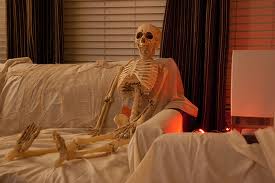
Today Oliver had settled a skeleton, upright, at the other end of the couch. A male, presumed by its length and width, but made of thin bones. No flesh, no pulse, no beating heart. A person designed to fill the void. An object upon which they could both look in fullness, safe and safely distant from any desires.
Oliver sensed in that frisson of placement that this was one of the best things he had ever done. He held back his breath knowing that this act was a refinement of his judgement, of his many years of deliberation about longing.
They sat in silence until finally Marie began to speak.
“Dr Oliver” she began, “I have been thinking upon your ideas about my father. i believe that I have resolved my lack of faith and investment in the male figures in my life”
She opened the case and pulled from it, crumpled, a hat, a pair of mens trousers and jacket, and a pair of black shoes. She carefully dressed the skeleton beside her, slightly adjusting the jaw to place a horn-edged pipe inside the teeth .
Having dressed him, she dressed herself, and after a careful nod in Oliver’s direction, went to the door. Turning back, she looked at the couch and murmured “Good-bye Papa. Rest Well” and left.
For Oliver, love came and left the room simultaneously.
It was 10.27am.


Go Back

Writing prompts From Catherine’s magic box – Juliette Peers

Another brilliant piece from a GUNNAS WRITING MASTERCLASS writer.

Once upon a time there was no facility for the everyday person, that is those people who could not commission the type of portrait whose eyes followed you wherever you were in the room, so beloved of tour guides, lashed with gold and cherubs or even an exotic person from a far off land or two, to objectively see what their fashion choices looked like, except fleetingly in a mirror or in the subjective commentary of those whom they asked how they may be looking. The advent of photography gave a wider schicht of the community the opportunity to record themselves and their self-presentation. With each new development in the technology of photography from daguerreotype to ambrotype to tintype to albumen paper photographs – down to the small carte de visite, that first appeared by the late 1850s in Paris, both the cost and the processes became less arcane and complex. Thus this opportunity to objectively record the fashion and styling choices, the chosen self-projection of a persona to the wider world, and even often the sitters’ own expertise of sewing and accessory making, millinery, embroidery, knitting and crochet, was extended progressively to further less well-off levels of the community.

Not only was the self celebrated in a manner that was both plural and trivial, and indeed even somewhat incontinent, a mid 19th century version of the selfie through the agency of the photographer, the advent of cheap photography gave birth to the craze for exchanging photographs with friends and relatives. Photographs could be ordered in bulk quantities of wholesale proportion from local photography studios for exchanging with others and people began to build up collections of friends and associates. Thus too the cheap nineteenth century carte de visite further precursed the twenty first century explosion of phone and digital image production and exchange. At the same time photographers began making mass copies of images of political, cultural and social celebrities and the prominent which were then sold to the public. Queen Victoria gave John Jabez Edwin Mayall a license to mass produce and publish photographs of herself and her family members in 1860, ratifying what had been an ad hoc consumer driven process, and also contributing to the development of the modern professions of publicity and image control. With the range of imagery offered for sale, collectors could then slip into their family photograph albums, royalty, stage stars, generals, leaders, poets, composers and etc as if these celebrities were also intimates alongside those close members of the family circle.

As well as a fascination with collecting images of the beautiful, glamorous and enviable, there was, despite the Victorians’ stereotyped reputation amongst later generations for being staid and formal, also a mania for the emphatically physical reminders of other ability and other body types than the vanilla norm. Hence the proliferation of strange images of circus and sideshow stars from the mid-19th century onwards. Dwarfs, giants, beaded ladies, armless wonders, people with multiple limbs, conjoined twins and many other people with disabilities and non-standard boy types captured public attention by means of photographs printed and distributed sometimes into the hundreds and thousands. Images of acrobats and contortionists, who also presented a striking and unconventional appearance via their training and bodily manipulation, and images of people from non-western cultures, particularly arrayed with indigenous dress and weaponry also found buyers amongst those who searched out unusual photographic imagery. In an era before adequate public health insurance and public health systems, families with children or members who were different or required special needs would often send them to a circus or a menagerie. Sales of photographs of sideshow freaks often brought back a small income to the person portrayed – most often substantially creamed off by their managers. Some families who were poor sold children with visible and spectacular signs of metabolistic difference to circuses and sideshow promoters.

One day this practice would be seen as unethical and unacceptable – just like making racial humour or racial caricatures as the basis of theatrical performances. In the 19th century the extraordinary and extravagant lifestyles of General Tom Thumb, Commander Nutt, Minnie and Lavinia Warren who were little people of global renown made the fraekshow classy and elegant rather than gritty and shocking. They met royalty and world leaders, and towards the ends of their working lives came out to Australia. There were some interpersonal tensions, despite the group being packaged as symmetrical commodity with both Tom Thumb and Commodore Nutt warren falling in love with Lavinia Warren in the early 1860s. Together the quartet earned huge salaries which they spent on the most remarkable range of luxury and bespoke goods including fashions, carriages, yachts, racehorses and palatial mansions with the most sumptuous of Victorian furnishings specially commissioned in proportion to their size not that of normal adults. An early newspaper advertisement rom April 1864 captures the sensational and cult appeal of the quartet of performers[i]

GEN. TOM THUMB
AND HIS
BEAUTIFUL LITTLE WIFE
The late Miss LAVINIA WARREN, the Fascinating Queen of Beauty!
COMMODORE NUTT
The Famous “$30,000 Nutt”
So called for having received that sum from Mr. P.T. Barnum for three years service.
ELFIN MINNIE WARREN
The Smallest Lady of her age ever seen.
Here are a Married Couple, a Bachelor and a Belle.
ALL FOUR WEIGHING BUT 100 LBS.
Perfect in Form and features.
The World never saw anything half so Wonderful!
NO LARGER THAN SO MANY BABIES!
Educated, intelligent, Social, Affable and Polite-
Who can wonder that crowds throng their Levees every day and are eager to feast their eyes

Because of the public’s fascination with people of extraordinary appearance, a nineteenth century photographer shot and posed this remarkable photograph now in Catherine Devenny’s magic box of inspiration of a giant and a small woman. Often photographers increased the pictorial interest of one sitter by putting together strange and visually striking combinations of unusual people. Like many small people in the 19th century following on from the standards set by Tom Thumb, she is dressed as a highly fashionable and elegant woman. Having seen many similar images but not this one exactly, the young girl may be Millie Edwards, 1877-1919. The girl photographed certainly looks like her manner of personal styling and her general looks. Minnie toured globally as did Tom Thumb and his entourage and also met many significant people as they travelled. After her American-born husband Francis Flynn 1864-1898, died and was buried in Broken Hill after catching pneumonia on an Australian tour, where previously the couple had enjoyed vice regal receptions in Adelaide and constant press attention, Millie retired to live with her English family. who had migrated to the Coromonadel Peninsula in New Zealand, and she died in Christchurch in 1919. The man in this image wears far less glamorous dress and he does not appear to be identified in any of the considerable amount of online discussion of the most famous Victorian sideshow and circus personalities.

Not all of these photographs of the Other were exploitative. Sojourner Truth the black feminist and abolitionist made an income by selling her own images, often at her lectures to her respectful fans. She shows a neat postmodernist awareness of the inherent strangeness of the image, and its separation from the construction of “reality”. “I Sell the Shadow to Support the Substance” stated the inscription on the back of her publicity photographs. Wounded American Civil War veterans visited photographic studios and had printed photographs of their wounds and with long descriptions on the back listing the amount of children they had to support, the loss of their ability to earn and the fact that they had acquired these injuries in defending the community and its political and social values, arguing that it is surely time that the public give them something in return. What is most shocking is not the visible disability, but the economic exigencies that forced people to both image and narrate their injuries in such a dramatic and abject manner to try and earn enough money to keep them and their families

There has been a considerable interest of revival around the surrealistic impetus of these freakshow photographs and because of that in the twenty first century. They are traded enthusiastically on ebay and through speciality antique book, print and photography dealers. They have inspired everything from the Australian novel Little People by Jane Sullivan, to the cult TV series Carnivale to Lloyd Webbers hyperbolic turkey of a musical theatre piece Love Never Dies, which had a strong sideshow aesthetic. There are also photographic and creative and subgroup practices that reference these remarkable antique photographs, such as the work of Joel Peter Witkin and also many steam punk and neo-romantic image makers, who seek to capture the proto-surrealistic elements of the Victorian fascination with exceptional people.

Artists, writers, stylists, collectors and dealers parallel 19th century audiences in having a seemingly endless obsession with these images. Until finally we look at these 19th century pictures and wonder who is the exploited and who is the exploiter. The gravitas and seriousness and formality of 19th century photostyling and poising gives away few secrets about the woman and man pictured on the image from Catherine Devenny’s box of procative and haunting images – are we devouring the strangeness with our eyes, or are the subjects dignified agents capitalising on our curiosity?

[i] http://www.yatespast.org/articles/tomthumb.html

Go Back

Chocolate and ice-cream – Jen Hocking

Another brilliant piece from a GUNNAS WRITING MASTERCLASS writer.

Alzheimer’s is a creeping disease.
You have flashes of it at first – is Dad just getting old and changing?
Is personality a fixed thing or do people really continue to change?
Does everyone have a kernel inside of who they are?
Then, it’s like dog’s balls.
You want to stop believing that it’s happening, but there it is.
Dad has got dementia.
Either that, or he’s a complete prick and you just never noticed.
And then the worst/best thing happens – he turns and asks you: “what’s happening to me? what’s wrong with me? Why are we here seeing this psychiatrist?”
And you catch it in your throat and say, “well, because you have this thing called dementia Dad. And it’s not going to get better.”
And you hug each other and cry together in the waiting room of this prick psychiatrist, in front of a bunch of people you don’t know and you think – so that’s the Dad I used to know.
He’s still there. But he’s also gone.
And for the rest of his life you kind of want him to die, because what is life if it’s not being who you are?
And, in a way, being who he was kind of killed him in the end.
When the speech pathologist outlawed squares of milk chocolate and ice-cream because of “aspiration risk” we ignored it for a while.
But then we got down to thickened water – WTF is that? And he voted with his feet and stopped eating anything.
And then, gradually, slowly, he died.
I tell you, if I had the choice of drinking thickened water and living or ice-cream and dying – I know which way I’d fly.
Twitter: @jenhock13
Go Back

Red Balloon – Catherine McGauran

Another brilliant piece from a GUNNAS WRITING MASTERCLASS writer.

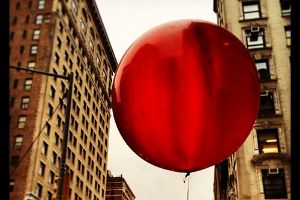
It didn’t seem like a big thing to ask, that his parents buy him a red balloon to celebrate his sixth birthday. He’d seen other children rewarded with balloons for doing virtually nothing, and he was turning six. To a regular person turning six might not be a big deal but everyday life was different for Alvin. Alvin was born with a terrible condition that meant at six years of age he stood barely one foot tall, roughly the same height as the shaft of his father’s riding boot. And because of his physical fragility Alvin’s parents were horribly over protective. While most of his classmates walked to school, Alvin was picked up and dropped off in the stifling safety of his mother’s car, leaving him very little time, if any, to explore the exciting world himself. Alvin craved the freedom he knew he wouldn’t get for at least 10 years and because of that he started reading about things that he thought were free – birds, feral cats, deserts and fish were some of his favourites but another one that grabbed his attention were balloons. Looking at a brightly coloured balloon bobbing against a bright blue sky was one of Alvin’s favourite things to do. It reminded him of the world he knew existed beyond the little town of Pennybrook, and that one day when he was free of his parents’ grasp he would go out and find it. Thinking about the balloon, Alvin suddenly realised that he should have asked for a fish. The fish was a safe bet because it was contained to its bowl and therefore posed no physical threat to Alvin. His parents could even clean the tank. The balloon on the other hand was made of rubber, he’d no doubt touch it at some point and who knows he might even be allergic to rubber. This was the kind of risk his parents saw everywhere. Desperate for an answer, Alvin pushed his ear up against the bedroom door but couldn’t hear anything. He stepped back and all of a sudden the door swung open and Alvin couldn’t believe his eyes. His parents were standing there holding it – a big red balloon. Alvin was shocked. Tears started running down his cheeks, and he reached out in disbelief to take the balloon from his mother. “Can I take it outside?” he asked eagerly. Concerned, his parents looked at each other. “Mmmm, yes OK,” his mother sighed reluctantly. Outside the warm sun seeped into his tiny body. He was still in shock, holding onto his very own red balloon. Then all of a sudden Alvin felt his body became light. Then he became lighter, and lighter again until he realised that the balloon was carrying him into the sky. Alvin was terrified, until he saw that this could be his chance. All he had to do was hold on tightly and he’d be swept away to another town where he could finally start exploring. Frantic, his parents ran outside to see their son flying across the rooftops held up by just a single red balloon. “Something like this was bound to happen,” his father said.

Go Back

The Girl With The Light In Her Eyes – Justine Devonport

Another brilliant piece from a GUNNAS WRITING MASTERCLASS writer.

Once upon a time there was a girl with ideas. They bubbled up inside her and shone like a light out of her eyes. The trouble was – she was also very pretty. Everyone she met would comment on her beauty. She was patted by old women and men alike. She was paraded, she was photographed, she was primped and pinched. She tried to share her ideas. She tried to tell people, she tried to write, but it soon became apparent that beauty was her only worth. Her ideas shrank and formed a small ball in her head. They could not come out of her mouth, but she needed to air them. They needed to be placed on an ejector seat and shot out into the universe.

She was lauded for her beauty, everyday people pushed and pulled and preened. She was put on show, a sash placed across her magnificent chest; Winner – Miss Atlanta 1922. They asked her questions, but as her ideas began to spew forth, they laughed and shut her down. Her ideas were of no value in this world, how could she be rid of them? Her head hurt. She knew it was because of those ideas, contained, caged for so long, creating pain. “Don’t look so sad, don’t look so worried” they said, “You will spoil your pretty face” they said. “Stop frowning. You think too much.”

One day she felt her head might just explode. She paced, she cried, she howled like a banshee. She was not a happy girl. She was not a pretty girl. “Who is this terrible girl?” they asked. “Does she need a nap?” “She needs some quiet time” they suggested.

Her head screamed “NO”. She needed to be loud. Because of that, they locked her away. She was shut off from the world. “From beauty to tragedy” they lamented. “Its a madness” they said .“ Probably from the mother’s side” they mused. “She needs to get these silly ideas out of her head”

And because of that notion of madness and worse, they injected her with a poison that calmed her mind. It entered her knot of ideas, that pulsed in her head, that pushed on her skull. The ideas dispersed, they were lost in her head. She struggled through the fog, searching and seeking, unable to find them. She found spicks and specks, dribs and drabs, bits and pieces, but nothing whole. Her face remained in it’s frown, a dull look in her eyes. When the ideas were lost, so to was the beauty. Until finally people forgot who she was, her value was gone. That girl they had patted, preened, pushed and pulled, left alone in her cell, searching through the fog of her mind for those fabulous ideas that once were there, but could be found no more.

Go Back

Suddenly – Sheree Cairney

Another brilliant piece from a GUNNAS WRITING MASTERCLASS writer.


Two white lights slowly appear from the distant darkness. I can only just see them as my eyes adjust against light falling from my own headlights to the bush track ahead. Just as I squint to gauge their distance, they do an unbelievable thing. They flip. They flipped? The car flipped!! Fuck! No way. That coffee half a kilometre back must have worn off already, damn it. I must be hallucinating. Seeing things. I had been driving for days after all.  But no. As I get closer, layers of uprising dust glow in the light of the car’s upturned headlights. The car is upside down and looks squashed.

Terror drowns me, as I pull up near the wreck in the darkening dust. I’m no medico. No first aid training. Not even a first aid kit. Not that I would know what to do with it anyway. And nobody else around. Not for miles maybe. Possibly days. Just me. Except for anyone in that car – be they dead or alive. It looks so squashed. And quiet. There’s not even phone reception. Never before had I felt so inadequate. So unprepared. Visions flood my head of talking someone through their last breaths, thinking I could save them if only I knew what I was doing. Worse still it could be children. Or babies. The last thing on earth I want to do is approach that car. But it’s the only thing I can do. I brace myself against waves of intense distaste. I freeze. Time stands still.

But there is no turning back on this one. A voice in my head screams, ‘get out there, people in that car need your help’. I click into action. I run to the car. The car is dripping fuel. Would it blow up? Should I approach? I have to, there might be someone stuck in there. Dead or dying. I see no movement, so run to the other side of the car calling out, ‘can you hear me? Is somebody in there? Are you okay?’

There I catch sight of the driver, upside down. His legs seem squashed under the steering wheel. At first I can’t tell if he’s dead or alive. As light from the headlights of my car nearby falls on his face, I gasp in horror. It’s him! My stomach contorts. I want to vomit. For a moment the scenario leaves my mind, flooded by the deeply entrenched hatred and disgust I feel for him. The pain he infringed still bearing heavy on my soul. How could this happen? It could have been anyone. As the realization sinks in, he suddenly surges up. His blood stained face and bloodshot eyes pounce towards me. I jump back terrified. I freeze again. Surely this is not happening. It is. He wriggles but goes nowhere. Realising he is stuck, he looks up to me and reaches out his arm. No words are spoken. We are stuck in this moment. He is stuck under the car and can’t move. Unless I pull him out.

Go Back

Melbourne 2035 – Elizabeth Jabornik

Another brilliant piece from a GUNNAS WRITING MASTERCLASS writer.

Sally’s retirement unit was in the poorest part of the city. It was 2035 so it was one of the suburbs that had been by the Bay. Sally lived in a room with ancient, faded carpet that had once been a deep, velvety purple. The room had been cream coloured but the surfaces had stained yellow.

A 12 year drought had left
dusty, grey, leached of green. The famous avenues of trees had been hard hit. Many had succumbed to scorching heat and the council had struggled to save the last with precious bore water.

Docklands, Brighton, Williamstown and St.Kilda had been flooded and the foreshores had been sacrificed. Now a high concrete wall ran around Port Phillip Bay. It was ugly, grey and stark, as hideous as the old wall around The West Bank. Palestine had returned to the Palestinians years ago but it was a shadow of the beautiful country it once was.

During the War thousands of Australian families had lost children, shipped to the battlefields. Soon after the War, street battles and strikes had rid Australia of the government. The police and army were well equipped but they were no match for the demonstrators.

Sally had fought side by side with students and unionists, refugees, socialists and workers from every kind of workplace. Her long dark hair tied back, bullet proof jacket, her feet protected by Blundstone boots.  Hundreds of thousands of people took to the streets. Sally was elated, after decades of struggle the people had finally wrested back control. Life was sweet for a while but then the heat began to rise. The ice caps melted.

She could remember the 1980’s when the summer nights were cool and a breeze rushed across the Bay. The Summer busters tearing in from the South West and thunder rumbling across Melbourne before the sudden rain. She remembered walks in the forests where tree ferns lined the creeks and she had seen king parrots with feathers so rich in orange and green they almost looked fluorescent. The smell of eucalptus or the pots of herbs on the deck as the spray from the hose reached them.

There had been spray from waterfalls, meals at restaurants surrounded by lawns, ponds, rhododendrons and maples. One night she visited a garden so beautiful it could make Ivan Milat break down and cry. People sat on the grass and listened to a concert in the long, mild evening.

Winter mists as she drove down from the ridge into the haven of The Patch. A wide lake of fog that filled the Yarra Valley. The sun rose above the fog, flower farms, strawberry fields, tree nurseries. Then vines ceased to grow in the Yarra Valley and it turned to a ghost land, the skeletons of vines left on rotting trellises.

The forests had been hit by bushfires. Black Saturday had been the first of many fires that scorched the high country. Kinglake, Healesville and Marysville, Lake Mountain, Sassafras and Ferny Creek. People could not live there any more. Once the forest was destroyed in fires that burnt hotter than a nuclear bomb, drought killed plants that tried to grow back.

Now the Summers stretched out over much of the year.

Thunder storms brought savage lightening and stripping winds, but little rain.

 For people living on the flatlands it was hard to keep houses cool. Crop failures across the planet had led to hunger riots. The children and older people suffered the most.

Sally remembered once, walking into the cool aqua water at Wilson’s Prom. The whiteness of the sand and the squeaky sound it made as you walked. The granite boulders half covered in  bright lichen and the banksia trees cloaked in gold flowers. The silver backs of the leaves, wombats snuffling around the tent late at night. Rosellas in the tea trees,metallic scales of tiny darting fish in the river.

In 2021 there had been a run of nights over 36 degrees and possums had started to die and fall out of the trees.people gathered them up in back yards. Wombats hid in their burrows growing thin and mangy. Kangaroos scrabbled for any remaining grass and then hopped away to die.

Wilsons Prom was just a childhood memory now. Like green ferns, waterfalls and fogs, National Parks became a thing of the past.  Parks in Queensland were destroyed by Cyclone Tony. Meterorologists named the Big One after Mr. Abbott. The man who said climate change was “crap” The Gold Coast was hideous, truly, not missed; but a cyclone and flooding that destroyed Brisbane?

Sydney was drowning under rising sea water. It had been a stunning harbour.She thought about Brett Whitely paintings and the glowing murals in the Opera House.

Sally started as the worker brought round her meal, a protein shake and some energy biscuits. People hardly ever ate fresh food now. The price was phenomenal. Sometimes she thought about meals at home in the hills. Steaming bowls of soup or Summer salads with coriander. Biting into a juicy nectarine that had ripened on the tree. Cold beer on a warm afternoon after a swim.

She chewed on her food and put her knotty feet up on the old Ikea footstool. The wind snapped the bamboo blinds back and forth. She had only faint dreams now of a place with waterfalls and tree ferns and rain. Winter fires and crisp sheets. One morning when she was a child they were camping and the puddles froze overnight. She broke the ice, stomping with her little gumboots.

The gritty wind picked up and she lay back on the bed. Minimum temperature tonight 31 degrees.

The wind farm that covered most of the hills cranked up. The air conditioners hummed and Melbourne finally slept.

Go Back