




Category Archives: Gunnas-Masters

Time to live – Roshan Sahukar  

Another brilliant piece from a GUNNAS WRITING MASTERCLASS writer


It’s as if writer and funny person Catherine Deveny designed her Gunnas course with me in mind, I’m a classic Gunna, all talk and very little action, in all aspects of my life. I don’t tell people I’m a writer, mainly because I’m not one, oh and also because I figure to be a writer you probably should be putting pen to paper at some point, to write more than tea leaves, coconut oil, AAA batteries, I mean. So Gunnas is a writing workshop for people like me who are always gunna write but never quite get round to it. I have a house to clean, for goodness sake. I signed up for inspiration, and it worked. Among others, Catherine quoted Carl Jung who observed that “The greatest burden a child must bear is the unlived life of the parents,” which I have to say struck a chord. Part of why I am exploring writing is because I feel like I’ve spent a fair proportion of the past five years consumed by parenting small children and now I’m furiously grabbing back some of the more important bits of me that were left by the wayside, and trying to figure out my own future at the same time.


It pains me to admit it but in some ways I feel like I’ve wasted the time I had before kids. I mean, it was fun, of course. I developed somewhat of a career, travelled, saw plays, learnt a language and forgot it again, but it’s not like I really achieved all that much, more than the odd spectacular hangover. Perhaps that’s when I should have been writing more, because I had the time, but, and I’m cutting myself a major break here, maybe I was waiting until something – or someone – worth writing about – or for – came along.


These two little people, at once so vulnerable and so strong, have turned my world upside down and inside out and back to front and every which-way and forced me to look at who I am, who I was and who I would like to be.


They have brought out the best of me and absolutely also the worst, I never knew I was capable of giving so much, I never realised I could be so tired, so happy, so angry, so content. They have heightened my emotional range and they challenge me every day. But I do sometimes wonder if I should have fulfilled some kind of potential before they were born, before they enriched and depleted me, before I was too tired to think.


But why worry about that? What I don’t want is for my kids to be burdened with my frustrations of a life unlived so – guess what? – I’m gunna live it. Today I was asked what I would do if I had six months left to live. For starters, I would find joy in the everyday. I wouldn’t waste precious time on the boring bits, if I could help it, and I would definitely employ a cleaner, possibly full time, but even so some of life’s boring bits would still need to be done by me so I would do them with joy. I WILL do them with joy. Remind me of that next time I am on hold negotiating a better insurance deal.


So often, at home with squabbling under fives, I find myself just going through the motions, some less-than-inspired afternoons I catch myself watching the clock, calculating the hours until the kids’ bedtime or, gulp, until I can drop them off at childcare the next day. Surviving but hardly thriving. I’ve realised I need to use our time better, get off Facebook, give my kids more positive experiences and to hell with the mess! Keep them busy, run them ragged and stop beating myself up for occasionally letting them be bored (while I quickly check Facebook). I will enjoy the time we have at home together because soon, whether I have six months to live or sixty years, it will be gone. I will stop killing time and start spending it wisely. Because the next six months could be my last, and if they’re not I’m gunna do my best to live them like they are.

Roshan Sahukar is not a writer and doesn’t have a website. Or a blog. Yet. Find her on Twitter, but not tweeting much @mrsyeo 
 

Go Back

The Girl in the Yellow Raincoat – Mary Llewelyn

Another brilliant piece from a GUNNAS WRITING MASTERCLASS writer

Once upon a time there was a sad and lonely woman who lived alone with 15 cats and lots of rats and mice and moths and spiders and cockroaches.  She lived in a creaky wooden house down a little lane filled with holly and jasmine.  She loved all her animals very much, even when they would sometimes eat each other.
Everyday she would go to her boring job in data processing where she sorted out lots of numbers in a way that meant something to someone, but nothing to her. She ate lunch at her cubicle desk and spoke to no one.  At 5pm she would walk home through the rainy streets of the town, and down the jasmine scented lane to her little house where the cats and rats and insects and spiders were waiting for her. After everyone had eaten dinner and settled for the night, she would most nights play music and dance around her lounge room. She would dance the song of longing and loneliness. She didn’t know what else to do with this pain in her heart.
Sometimes, if she felt more calm, she would let the cats comfort her. As they snuggled and purred on her lap, she felt their gentleness and warmth seep into her bones and her heart would soften and purr with them. But around people, her heart remained locked behind rusty iron gates.
Her heart had been open once, many years ago. She had come into the world full of wonder, and she had danced and sung in a chorus of others. And there was a special love once too. They had busted each other open with joy and tenderness and the golden light of love. She had not felt truly alive til she met this man.
But one day he left. And never returned.  Many months later she discovered he had gone away with another woman. He had broken their golden bond. Her heart was ripped open and crushed. Still today, many years later, she feels pieces of their broken love in her heart, like shards of shattered glass.  She never cleaned the wound. She left the glass inside and let the grass grow over it. And put a big iron fence around it so no one would ever come poking around in there again.
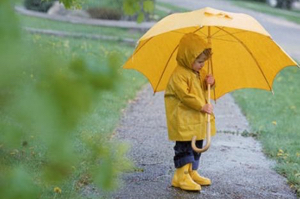
One wet windy day, when she was walking home, she saw a small child sitting in the gutter in her yellow raincoat and yellow rain hat. Her little yellow body heaved and sobbed and shivered with sadness. Her head was in her hands and her cries pulled at the heart.
The woman wanted to keep walking. She didn’t want to talk to this miserable child. “I have nothing to offer anyone. What can I say to this wretch? I am so full of sadness myself.”. But as she went to pass by,the child looked up.. In that instant, the woman felt a shock go through her body, like an electric current.  Looking back at her from under the yellow rain hat, were billowing blue eyes washed clean by thousands of tears. She knew these eyes, there was something so familiar about them, but she couldnt say what…..
Without thinking about it, she knelt down in the rain and hugged the wet and crying child. And then, she herself began to cry. But this time, her tears were not for herself. “it’s ok little girl. What’s wrong? Why are you so sad?”
The blue eyes fixed on her. But the child didn’t speak.  Her bottom lip still shaking and sniffling.
“come,” said the woman. “I live very close, just down the lane. Come and get warm in front of the fire, and I’ll make you a nice rich hot chocolate.”
The child’s face became a little brighter, a flicker of a smile on her lips.  She followed the woman down the lane and into the creaky old house. The moment she opened the door, all 15 cats burst out in a ball of fur and meows and purring and rubbing themselves against legs and door frames and tables.  The child broke out into a toothy smile and patted and tickled them, giggling with delight. The woman watched her as she stoked the fire and then poured the thick creamy chocolate into 2 mugs. They sat together on the old sofa, together with all the 15 cats, and felt the warm sweetness in their mouths and trickling down into their tummys. The woman put her arm around the child, and together they fell asleep covered in purring cats and full of contentment.
Then the woman had a dream.
She was running to the top of a big grassy hill sprinkled with daisies. The sun was high in the indigo sky, fluffy white clouds keeping pace with her.  Huff and puff, her legs were strong and fast, her tweed skirt flying about her legs. Up and up,,without slowing, she ran all the way. And at last she came to the summit, and from there she could see the whole world. The little farms below, and forests and the blue river winding to the great sea beyond. And she heard the seagulls swooping over the great cliffs,  and saw the great crashing waves and smelt their salty breath. And she could see further, into villages and houses and shops and schools where all the people of the world lived out their lives. And she could see still further, into the hearts and minds and dreams of every person. She saw a mother with her newborn, sleeping softly in her arms. She saw folk at the market bartering and bantering and feeling belonging and joy with their friends. She saw the squealing delight of the school playground.
 But she also saw the child left out and teased. And the grieving mother who’s child had passed away. And the lover left behind.
And because of that she started to see the sadness that lives in all people sometimes. And that this kind of sadness was as real and noble as happiness.
Suddenly, she felt a shift in the breezes, and she began to feel less alone in the world.
In that moment, her heart fluttered and trembled in her chest, and with a deep pain, began to shake off the scabs of self pity and suffering, and the dirt and grass that had grown over it and the iron fence that and imprisoned it for so long.
She began to let in the air and the sunshine and the rain and all of the beauty of the world. And there, behind the iron fence and under the dirt, was her long buried heart, it’s tender pink skin glowing softly. Then a strange and wondrous thing began to happen:  the pieces of glass buried deep inside began to dissolve in the moonlight.
Suddenly, a drop of water fell on her hand. She looked up from the grassy summit and saw the turning of the sky, now heavy with black rain. “time to go” she thought, still floating in the glowing rapture of her newborn heart. More drops. She looked down at her arm. She was wearing a yellow raincoat.


Go Back

The Gunnas – Margaret Martin

Another brilliant piece from a GUNNAS WRITING MASTERCLASS writer

Synchronicity happens. What you put your attention on grows. The magnet of commitment. Etc.

On Wednesday my therapist told me to work on my self-worth. Self-love, even. Things will apparently start happening when I start to value myself instead of worrying about the world.
Today, Friday, in Catherine Deveny’s The Gunnas writing class, I was listening to Lucy the lawyer, and I can’t remember her precise words, but her expression and tone of voice was like a mirror of my own. The issue was what to write? Because when she was writing about clients or for clients the words flowed, but when she was trying to write for herself nothing came out.
It’s that service ethic thing. What you do for others is worthwhile. What you do for yourself is bottom of the priority list, just under unpacking the dishwasher. A waste of time that could be used for better things, to better purpose. This is a lifetime thing, a consequence of being brought up female, Christian, or just plain ‘good’. Think of others before yourself, don’t be selfish.
The next exercise was 5 minutes free writing. Don’t let your hand be still. So of course I started thrashing these ideas out with the stiff, painful muscles of my right hand in my doctor’s hand-writing. (I’m not a doctor, by the way.) When I do actually write, and stop doing online Sudoku, I trail off into political rants and social justice things of the kind you see hundreds of on the net. I suddenly realised that this is because saving the world – which of course, I can do by ranting online – is for others, not for me. It qualifies as unselfish. It’s not about me. First save the world, then start your novel. So the whole self-worth thing is exactly where it’s at for me, right now.
If I want to pacify the service ethic in me, I claim I am giving voice to the silenced. That is probably why it let me get away with my play. it had a strong, overtly feminist agenda. But perhaps giving voice is not a social justice thing, but curiosity? Perhaps I am looking to have experience through the eyes of the characters I am creating. Perhaps the silence/voice thing is just an excuse to cheat and have other people’s adventures with them … that is what acting is, after all, and I like that.
The next 5 minute exercise was stuff about what to write, whose writing I liked and random ideas. Nothing revelatory. What was important was that my handwriting changed. It flowed, got less jagged and cramped, got big and messy and assertive and easier to read. And my hand stopped hurting. My hand has been hurting while writing for about 40 years, which is why I love computers. It made my uni exams hell, and I had to take double the space to make sure that I could be read.
I can write.
_______________________________________________________
Strength Training
Once upon a time there was a little old lady. A very little old lady. She was precisely crotch high. On some people. She had to be careful where she walked, and could never, NEVER bump into anyone without looking.
Every day she would go for a walk in the park with her shopping bag. The walk in the park qualified as exercise, which the doctor had told her she should do. Aerobic exercise. The shopping bag qualified as strength training, but only on the way back, when it was full. Every day she went to the grocer’s, the greengrocer’s, and the butcher’s, bought enough food for the next 24 hours, and carried it home. On Mondays, Wednesdays and Fridays she carried it in her left hand for the first half of the walk home and in her right hand for the other half. On Tuesdays, Thursdays and Saturdays she carried it in her right hand for the first half and in her left hand for the second half, because she like to lead a balanced life. She didn’t shop on Sundays. She ate leftovers.
One day she was walking home as she normally did, and she was exactly halfway there. She knew this because she was just shifting the bag from her right hand to her left (it was a Monday) when the sun disappeared. John Clarke describes the generously built gentleman as having a ‘fair-sized roof over the tool-shed.’ Well this wasn’t a roof so much as a second story. It should have had columns to prop it up.
And because of that she stopped. She turned around slowly and carefully, because this had happened before, and she knew she had to be careful or her face could end up in the wrong place.
But when she turned around, she saw, instead of a trouser crotch, two lumps in the trouser legs. She couldn’t figure out what they were, and stood stock still for what seemed like forever.
Until finally, a voice from way up high said, ‘Can I help you with that bag, little lady?’
She looked up. Way up. Although she was used to that. Way up there, past the knee lumps, the trousers, the belly, the belt, the man boobs and the beard, a voice was coming out of a comfortable-looking face.
‘Well, actually,’ she said, ‘No, thank you. It’s my strength training, you see.’
‘How interesting!’ he said.
‘Yes,’ she replied. She turned back. ‘Goodbye.’
‘Could I see you again, perhaps?’
‘I come here every day,’ she said,’ and walked on.
Go Back

Dave – Stephanie Grace

Another brilliant piece from a GUNNAS WRITING MASTERCLASS writer


He sat, with the hat between his legs and the dog at his feet.
It was his third morning in the same spot, his few belongings surrounding him in a small circle.
His possessions consisted of a sleeping bag, rucksack, newspaper, water bowl for the dog, a packet of durries and a longneck of VB dressed ever so elegantly in a paper bag.
The air was damp; his clothes slightly wet, leaving him to shiver slightly. He’d not had a shower for some time so the dampness stuck and the dampness stank.
The smell of alcohol emanated from his skin to such an extent that you could smell it as you crept closer. He could see people cross the street to avoid him; to avoid feeling their self imposed middle class guilt that came from knowing that life looked like this for some people (even if none of them cared enough to do anything about it).

He had no time for their guilt. This was his life; waiting on one corner for a few days, to be shifted by the police when the shop owners grew tired of looking at him; the vagrant who had taken up residence on their footpath.
He was an object to be seen- to evoke emotion, but not so much that it might prevent their lives from continuing forward.

His days were spent sitting, smoking, drinking and watching. He was never part of it. As the day wore on so too would the liquor. One longneck became one litre of wine… became the toxic taste of methylated spirits mixed with pineapple juice.
The stench- the stale stench of smoke and the foul smell of grog would increase; his alcoholic belligerence and volatile language spitting from his mouth. He threw expletives of the worst kind at unsuspecting and innocent passers by: ‘Don’t call me a fuckin’ rock spider!’ he’d yell at everybody who never said it. ‘You’re all fuckin wombats’ he’d yell at the world as a collective, pissed off and pissed.

Slowly the grog would sink so far into his system that he’d get sleepy. Nodding off with a lit cigarette still in his hand, the ash burning holes through his clothing. Suddenly a sense of calm would cloak their street corner as the man transformed into a tangible illustration of societies failure to protect.

Sleep comes and rests his mind, taking him away from the darkness. But still, he will wake up and not have anywhere to go.
Tomorrow he’ll sit with his hat between his legs, the dog still at his feet.

Go Back

Butterfingers – Lauren

Another brilliant piece from a GUNNAS WRITING MASTERCLASS writer

She was her father’s daughter. All her life people had told her that. Mostly, when she was quite young, that had made her happy and proud. There was much to admire about her dad. And there was no denying it, she could see a lot of herself in her father. Her body was slight and neat and compact like his. She had the same longish face, the same set of his mouth, the same shaped eyes. She could eat without worrying about her weight (at least until she hit 50).

He had taught her useful, practical, impressive things that she had carried around with her for decades and which still had a utility on a daily basis. She drove confidently with her hands at ten-to-two on the steering wheel and accelerated competently into corners. Men commented on her firm handshake and her ‘good arm’ with a ball. Thanks to her dad she had excellent eye-hand coordination, an appreciation of all kinds of sports and a facility for some.

He had always been there for her, in a way she couldn’t remember her mother being. Or perhaps it was simply in a way she had preferred. He figured in her earliest memories, and for a long, special time it was just the two of them. She could remember listening to the Apollo 11 moon landing on the His Masters Voice Wireless with her father, sitting on the brown-carpeted floor in the lounge room when Neil Armstrong and Buzz Aldrin made a small step for man but a giant leap for mankind. She remembered them sitting in the same spot playing with the Memory Game cards for hours, her father praising her. Always praising. And more hours in the back garden throwing and catching a tennis ball, her father laughing and calling her ‘butterfingers’ when she dropped a catch.

He taught her how to ride a bike and took her riding along the freeway that was being built near their house. They cycled together along the empty lanes as far as they could go, until the bitumen ended abruptly in shards of ragged steel and concrete, like bitten finger nails, and peered perilously over the barriers into the construction site far below.

On Sundays, her father, wore the big brown cardigan with metal buttons embossed with anchors that her mother had knitted for him, and took her to the corner shop where they bought ‘Coconut Roughs’ – crunchy discs of chocolate in copper-coloured foil. They dropped pieces of bark into the creek and watched them travel downstream, bumping and bouncing around the rocks like little boats. That was when she learned the word Bilharzia, and to be afraid of stagnant water. Many, many years later, on a visit back to South Africa, she returned to see the creek, but it had disappeared, taken over by houses and the roar of cars rushing past on the long-finished freeway.

Despite being such a strong presence her father was also an absence in her life. He travelled a lot and for long periods of time, leaving his wife and daughters alone for weeks, and so was often oblivious to the unfolding dramas and minutia of domestic and school life that were presided over by her mother. She would threaten to tell our father about their transgressions when he got home, but the threat rang hollow, they all knew he wasn’t really the authority in those matters.

When he was not ‘in the far East’ and not at work he was affectionate, at least with his daughters. He was also a marathon runner, and when he wasn’t smelling of sweat from a training run her father smelled of Old Spice.

You are your father’s daughter. When her mother said those words she spat them out with bitterness, disappointment and accusation. Her daughter felt it as a slap, an insult. You are more his than mine. She meant her daughter was cold, withholding, critical. It was true. She saw what her father saw and felt her mother saw her looking with her father’s eyes. Her mother was afraid of their alliance. He was her hero. Her mother felt betrayed, and she felt guilty about it then. It was only when she was older that she could see her father as her mother experienced him. She would always be her father’s daughter, but she understood too that he was just a man.


Go Back

Packaged to Play – Louise Clare

Another brilliant piece from a GUNNAS WRITING MASTERCLASS writer

Mae sat alone on the playground bench watching the other kids play. She didn’t really understand how to manage friendships yet…well at least she thought that must be the problem. But it seemed strange to her that it was always so complicated at school…

At home with her sisters, she didn’t have to make an effort…she didn’t seem to have to try to be anyone else but herself. Her sisters actually told her that she was “born, packaged ready to play”. Clearly the kids at school didn’t think so, but she didn’t know what she was doing wrong. Hannah, her oldest sister always says that Mae is the funniest person she knows. Her sister Olive calls her “gorgeous Mae”, not gorgeous in the way she looks, and Mae knows this…because she was born with a crooked nose and has a slight turn in her eye, which becomes less slight when she’s excited…so it was more likely ‘gorgeous’ in the way she was with people…always ready for a good time…ready to share a good story or listen to a good one! Kate, who was just two years older than Mae, told her she was smart and that she was going to do something great with her life one day…not great for herself, but great for all people because she was “always making sure everyone was ok, and knew a lot about the people who weren’t”…like the Murphy kids who she’d found looking in the bins for food….she’d told her Mum about them because she was worried they’d get sick or go hungry, and now her Mum dropped off dinners to them when she had the time.

She did like Kate’s idea that one day she’d do something great…but Mae didn’t for a second think she was perfect ….not at all….she knew Annabel Clements who was in her class was just the most beautiful girl she’d ever seen; she knew Henry Isaacson, who lived down the road was more smart than anyone she’d ever met and he was only twelve, not that much older than her really; and she knew that Marita McLoughlin was so good, good in the sense that she probably never had a bad thought in her life. Mae had most certainly had thought bad things, especially about her Year 1 teacher, Mr Higgins. He would hand her a wet face washer every morning in front of the whole class and tell her to wash her face…then he’d spray room deodorizer over her, not even warning her so she could close her eyes first. But although she had bad thoughts sometimes…she wasn’t a bad person and she knew that…so why didn’t the other kids? Was it her wonky nose or funny eye? If it was just that, her head told her that she didn’t really need kids like that as friends….she was better off on her own…that wasn’t really what her heart told her though.

Go Back

Journeys of distraction – Lena Little

Another brilliant piece from a GUNNAS WRITING MASTERCLASS writer

What to write about? So many thoughts and ideas. This strange relationship I have with you. We are the authors of our fantasies. You are the conduit to mine. Our thoughts, our feelings, our secret passions and arousals shared through vibrations on a screen. No sound no pictures. A strange land of honesty ,without judgement without expectation. My repressed expression. Delicious sensuality. And you make me laugh. There is no need to be distracted by the destination. The journey suspenseful and exciting. Lost in waiting for that next line in Helvetica. Building the desire. Lets go all the way.

Go Back

The Last Strand – Baldie

Another brilliant piece from a GUNNAS WRITING MASTERCLASS writer

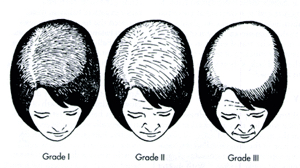
I just passed a hairdressing salon called The Last Strand.   Unfortunately I myself feel that one day I will be facing my own last strand.   Male pattern baldness may be very amusing to most of us but I am here to tell you that it has a terrible sibling;  female pattern baldness.
Doctors told me that it was stress related and would return soon.   I knew that they were wrong but nodded along anyway, hoping that in 10 years time I would not start to resemble a 5’2” version of Dr Phil.
Hairdressers invariably seem to think women’s hair thinning is only self-inflicted.  After the initial “consultation” I sense that I am deemed a “problem client”, as they seem to sense that I am willfully going bald – just to keep them on their toes.
“Stop teasing it,” says one, after carefully brushing out matted knots which I swear formed entirely of their own and without my assistance or encouragement.
“I don’t,” I tell her anxiously, and as she turns back to my head she realises that a half head of dreadlocks have formed without me moving a muscle.
“It’s the poor quality product you use,” volunteered her colleague so that the whole salon could see me for the cheap hair hater, even though she personally sold me the expensive detergent herself the last time I was there.   “You’re going to need a treatment which won’t be cheap, but you need it to repair all the damage you have done to it”.   Thank you.
What 30-year-old women wouldn’t actively render themselves bald?   Once I clapped eyes on a man with a shiny pink old bald head and a ring of hairs around the sides and realised how flattering it was, I just knew that it would look even more stunning on me.
“You aren’t massaging your scalp enough,” barked another as she enthusiastically rakes her fingernails across my head as Edward Scissorhands flashed through my mind.

The last strand indeed.  I’m getting a weave.

Go Back

The Adventures of Lilith, a big, white dog – Katrina Harrison

Another brilliant piece from a GUNNAS WRITING MASTERCLASS writer

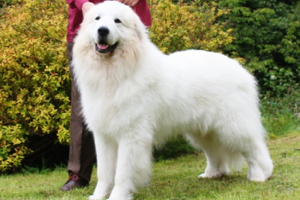
Lilith was a big, white dog. She knew she was big because people kept saying it, but also because other dogs seemed to think it was fun to stand underneath her.  They’d often bark at humans from that vantage point which she didn’t think was fair.

She’d heard the humans say that “May you live in interesting times” was a kind of curse and she’d never been able to understand why this was so. There were always so many things to be interested in – the sights and smells when she went for a walk, the people who came to visit her humans and the stories they told and her own history.

She wished she could remember what happened to her and where she’d been before she was in that park when she was about 9 months old.  They said she was a purebred, pedigree Pyrennese Mountain Dog who was worth over $1000, so why was she on the streets? Had she run away? Or been dumped? Had she grown too big and no longer fitted with the decor?  Did the family have a new baby or another dog?  The questions were endless but there were no answers.

Go Back

Pony Teller – Deb Cleland 

Another brilliant piece from a GUNNAS WRITING MASTERCLASS writer

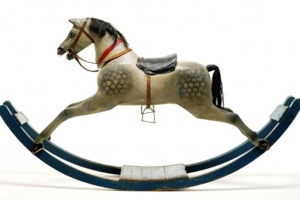
Don’t rock the horse. If you do, you’ll perhaps never realize your actions were not revolutionary nor extraordinary. They were not, in fact, anything more than following the kinetic motion suggested in the toy’s design.
Rock too hard and the damn thing breaks. Then you’ll have lost something precious: fixed-up things have scar tissue, thick and unfeeling.
If you stride into the overfurnished room and take a moment, you may notice that the rocking horse is mere inches away from the ancient Ming vase, collected from ancestors, by ancestors, a colonial reminder of Britain’s right to buy drugs.
So rocking the horse is a risky thing, a dangerous thing. Rocking the horse puts you, and others, in harm’s way.
But if you don’t rock the horse, you may never feel its rhythm, derivative though it may be. If you never straddle the saddle, never stand in the stirrups, never dig in your knees and grip with nothing more than hope and forgotten muscles, then, oh, then…you can never call yourself a rider.
Hugs


@debisda
Regnet / Fenner School ANU
Go Back