Category Archives: Gunnas-Masters

Today’s Work – Raggedy Ann

Another brilliant piece from a GUNNAS WRITING MASTERCLASS writer

Piece 1: 5 minute dump.
Sometimes I’m so scared of writing I think I will freeze or ossify and cripple myself. Sometimes I’m scared of writing because I’m scared that it will be a waste, that it won’t be the right decision. Because I need to make the right decisions. Sometimes I’m scared of writing because I’m scared of it being bad. Of being good. Of being bad. Of not knowing. Of not knowing myself. I’m scared of being a fool. I’m scared people will laugh at me and realise I’m actually an idiot. I’m scared I’ll have no respect. No precious respect. I’m scared I won’t be listened to, to be worth listening to. I’m scared I’m not worthy. Not worthy of love. I’m so scared I won’t be loved after my mother dies. I’m scared of writing because it’s better to keep your mouth shut and leave people wondering if you’re stupid than to open it and remove all doubt. I’m scared I just won’t be any good. I’m scared that after all the time and money – so much money – invested in my education that it will be wasted doing something at which I am not talented, at all. I’m scared my writing will be poor. That it will be ignored. So I’m scared of writing. Writers are so brave, so tough, so selfish. I wonder if writing is a conceit. I’m afraid that writing lacks integrity. There is suffering in the world, but my stories would not heal that.
Piece 2: 5 minute dump 2. Chelsea’s fucking middle class guilt angst.
A shopping list. Apparently a shopping list is fine for this 5 minutes of writing. I have a shopping list. Oh to buy what I could buy. My Dad buys what he needs. He buys the thrill of the rise of a long-haul flight. He buys the safety of a hotel room after a day in a Spanish market. He buys the gentle rocking of an ocean going boat moored at night in Vanuatu. He buys the rolling richness, the creeping warmth and gentle edge of a well-aged Burgundy. He buys the confidence that when you go to hospital you will get good food, peace and hand towels. He bought the feeling of a warm, pretty woman in bed with him at night, the reflected glow of her perfect dress and manicure at the Swisse tent at the Cup. He has bought the company of ex-leading professionals in the Probus club to join him in his retirement. He bought the sight of a glowering sunset over the bay from the upper deck of the yacht club. And when all fell apart, when my house would be lost, when my children were to be ripped from their home, my Dad bought me. Thank God. But Dad can’t buy his way out now. He can’t buy the cancer out of his bones and his liver. Dad can’t buy 20 years to see his great-grandchildren. Dad can’t buy the world better. So what is my shopping list? I’d buy his life now. But maybe give it a little bit longer, until he faces his death and truly sees what cannot be bought.
And finally: What I’d do if I had 6 months to live.
If I had 6 months to life I’d sell the house, take my kids and go around the world. I’d take them to Nepal and South East Asia and India. I’d take them to Prague and Rome. They’d learn the world is rich and good and needs them. They’d learn they are a tiny star in an infinite constellation, yet a star like everyone else. They’d learn their mother is independent and creative and strong and in love with them. They’d learn that they are survivors.
Go Back

Two easy pieces – Therese Damien

Another brilliant piece from a GUNNAS WRITING MASTERCLASS writer

Cured

Once upon a time there was a man staring out into space.  An elderly couple walked by, and couldn’t help staring at him staring out into space. They decided to make it their project to capture this staring in stone, so entranced were they by his staring.  They had barely begun when they ran into a few hiccups.  Every day that went by, they just kept staring at the starer and plotting their project.  Then, one day, they drank ten consecutive sips of water with their noses blocked and had an idea.  ‘Why don’t we get a block of stone?’ they asked themselves as a leaf fell off an oak tree.  Because of that, that is, the falling leaf, they said, ‘Right, we better get moving then’, and then because of that, they stared dawningly at each other and asked, ‘Isn’t it odd how we always say the same thing at the same time?’, until finally, with a surprised little smile, the staring man got up, stretched, and said, ‘I think I’ve got it.’

.
Cuppa-time.

Thank goodness for the cup of tea.  Something to do.  I bet the beauty of cups of tea has been written about as many times as there are grains of sand on this planet.  I stole that from The Bible.  Free association can be scary/fun/interesting.  Even meaningless boring utter crap.  But I digress from the cup of tea.  It warmed my tummy.  It hydrated me.  It felt good.  It smelt and tasted good.  It was just what I needed.  Ah, the piquancy.  Thanks, goodness.  One can only drink so many cups of tea in a day though.  Beyond that, there is…?
This is not about a cup of tea.  I know this is crap but I still search for the I don’t know what.  Nevertheless, cups of tea have been good to me in my life.

Go Back

Periods Are Gross – Deanne Carson

Another brilliant piece from a GUNNAS WRITING MASTERCLASS writer

Our relationship with periods is a funny one. We are told to hate them, to fear them, to distrust them. That they are dirty, disgusting or, at the very least, inconvenient.

They are, in the words of pubescent kids; gross.

‘What happens if I get my period in class?’

‘I can’t tell my teacher. I can’t tell my dad. I can’t tell my mum.’

‘How do I get the pad out of my bag to the toilet without anyone seeing?’

‘What if I don’t have a pad?’

‘What if I get blood on my skirt?’

‘I would never come back to school if that happened.’

Periods drain us. They mark us. They consign us to child bearing, to child raising.

Not that many pubescent girls are worrying about that, yet. They worry more about the mark on their underwear, the mark on their skirt, the necessity of wearing what some boys call ‘adult diapers’.

Menarche – the onset of menstruation – is a milestone. It’s a coming of age, the body’s way of telling us that our eggs are ripe for fertilisation. It’s not really a cause for celebration for seven, ten, twelve year old girls who don’t have baby plans in their near future. Less of a cause of celebration for transgender boys who can feel that the words ‘body-betrayal’ are blood-stamped on their underwear.

As adults we might put together a kit of pads, pain killers and chocolate, all in a pink zippered bag for our children to carry to school. We might mark the date with a celebration dinner; a welcome to womanhood feast. More often, girls say that they experienced one period, maybe two, before telling an adult. When they tell, most often they beckon to a trusted adult and whisper the shameful news out of hearing of others.

For those whose periods wait until thirteen or later the questions change.

‘Why aren’t I …?’

‘When will I …?’

‘What’s wrong with me?’

And once we reach that place in puberty, it marks us to others. That final growth spurt in puberty pushes young people out of their shoes into clown-sized feet. Then their arms and legs sprout like weeds from their still-short torsos. It gives girls that long, coltish look: the Lolita look. The look that has men slowing their cars for a closer, slow-whistle leer and has parents policing the clothes that children wear to try to slow the tide of sexual interest.

Our relationship to periods is fraught in this era of hand sanitiser and time keeping organised and synchronised by Apple. We want life to be packaged, predictable and clean. We want periods on schedule and measurable. But most of all we want to be clean.

Tissues.

Wipes.

Purse packs of Dettol brand anti-bacterial gel guaranteed to keep us 99.99% germ free all without water.

Liquid no-touch soaps by the kitchen sink, the bathroom sink, the garden hose.

From birth, they hear:

‘Don’t touch that.’

‘Don’t drink that.’

‘Don’t put that in your mouth.

‘Have you washed your hands?’

‘Get your hands out of your pants, you dirty girl.’

‘Don’t.’

The refrain of a generation.

And yet when we bleed it is messy, inconsistent, clotty blood that seeps, stutters or gushes from our vaginas. We recoil; repelled and repulsed. We reach for a tampon to shove it all back in. Out of sight, dealt with briefly in four hourly increments.

Out of sight.

‘Don’t forget to wash your hands.’

And when we are older, old enough, and our periods become ‘heavy’ or ‘irregular’ or ‘painful’, we will have a shot, a pill, a rod or an IUD.

But nobody tells us that periods are irregular in our teen years.

Nobody tells us that there are things we can do to ease the cramps. Nobody tells us that it’s OK to ask to be nurtured at ‘that time of the month’. Or that periods can help us keep track of our energy flow; our creative time, our busy time, our time of loving.

Because our society is set up to demand the same performance from us day in day out, six and a half hours a day if you are a student or eight hours a day at work. There is no space for glorious energetic accomplishment in the week after a period, followed two weeks later by a clumsy ebb. Because our world is measured in a steady pulse of testosterone and has no space for fickle oestrogen and progesterone.

Of course, some wombs do cramp and bleed furiously and every person should have the right to choose their own course to manage that pain. People in their 20s who demand a hysterectomy, sure that their futures do not include childbearing, should be permitted that autonomy. But for the most part young people are not choosing. We adults are medicalising the teen menstrual ‘condition’. Mothers are proudly declaring that they have ‘put their daughter on the pill’. And now, apps tells the girls the hour and day they will experience their not-really-a-period.

Periods are gross.

So we take hormonal birth control, the five year option, please, and we smile smugly and say, ‘Oh, no. I don’t bleed anymore, well, hardly ever, but nothing really’.

Like we have conquered the war we wage against our own bodies.

We have become the ultimate masters of cleanliness.

Deanne Carson is a sexuality educator who manages to be educated by thousands of children and teens every year. She loves talking about pimples, porn, penises and periods and is currently completing a book that answers questions like, ‘should you put toothpaste on you acne?’ and ‘does a pregnant woman have tiny bones her her vagina?’

You can book her for your kindergarten, school or community group at her brand spanking new website www.deannecarson.com

She has a gofundme you may like to support.

Go Back

THE INDELIBLE GIFT – Rosemary Feneziani

Another brilliant piece from a GUNNAS WRITING MASTERCLASS writer

Beneath the shocking fluoreensce of the light above, sat Carly. Her only companion a steaming cup of black tea and a freshly lit Camel cigarette precariously dancing between her nicotine stained fingers. A mass of white blond curls framed a long, thin tired face. Her Roman nose, black roots and thick bushy dark eyebrows the only hint to an ethnicity she once rejected and fought with. Simple and somewhat juvenile studs adorned each earlobe, however, the remnant scars of previous multiple piercings were a constant reminder of days more rebellious and wild. The deep crevices around her eyes housed the day’s mascara and as she squinted to protect her eyes against the rising cigarette smoke, the crevices deepened and darkened. Carly had once laughed aloud and unashamedly at a young department store beautician when she was told that the “elixir to eradicate those annoying laughter lines is a mere $70 and 3 days away…”

Ha!” hoarsely responded Carly “Ha! Laughter lines?! Now that’s funny. No, love I don’t bear these wrinkles or lines as you call them because I laughed, I bear them because I lived and live, hard” And with that, she resumed he anonymity with the rest of the department store crowd.

It wasn’t always hard and challenging. Life was once pure and magical. Life was once playful. Carly allowed her thoughts to journey to such a time when life tasted like sweet snow peas and the aroma of freshly baked biscotti would envelope her like a big bear hug. A time when Nonna Mami’s big bosom would dance in tune to her sweet melodies of nostalgia and longing.

Nonna Mami. Carly smiled.

Such memories were made all the more vivid and real by the piece of yellowing paper that Carly had gently unfolded and rested on the laminex table before her. The tea cup move aside and the cigarette butted out prematurely, Carly fingered the paper at the tearing folds, all the while conscious of the tears welling in her eyes. She did not fight it but was careful not to let her tears fall and smudge the ink that brought the cursive script to life.

The only sound, apart from the rhythmical ticking of the clock behind her that broke the deafening silence, was Carly’s gentle sobbing. She lifted a roughly manicured hand void of any adornments to her eyes and wiped them free of tears. Carly stared through the paper and beyond the words. She was suddenly an 8 year old child again wearing an oversized apron which carried the stains of past culinary delicacies and kitchen adventures. A hairnet gathered her shoulder length brown curls and contained them into submission. She looked ridiculous but felt beautiful. Nonna Mami stood tall and proud next to her, reading out loud from the same piece of paper that sat before Carly. Carly knew the recipe off by heart but loved the gusto in which Nonna Mami would read it.

OK Carla, now we cook!”

Go Back

Murder in White City – Jessica Barratt

Another brilliant piece from a GUNNAS WRITING MASTERCLASS writer

Tilly left her aunt’s place in West Perth without the trepidation that she had felt previously. She’d already ruined her reputation by visiting White City, what more harm could a visit to the King Street area do?

She walked quickly down Hay Street passing businesses and tradesmen who were out drinking after work. She stood out like a sore thumb. A young, unaccompanied, well-dressed woman walking down the street at twilight was a sight to behold.

Gritting her teeth and pretending she couldn’t hear the jeers, calls and stares, she continued at the same pace and made it to the King Street side of town; what some considered to be Perth’s den of iniquity.

Before she reached King Street, she turned down Shafto Lane. The Lane was absolute filth. The homes and businesses were rickety, dark hovels that should not house people. Dodgy characters were loitering about everywhere. Criminals, prostitutes, vagrants and women with tiny children clinging to their skirts all interacted with one another. Only the dirt poor would live in this part of town, and it showed.

Tilly finally reached the place she was looking for. It was a little neater than all the other buildings but it was still decrepit. There was no need to knock here, she simply pushed the door open and walked in. The barman looked up and immediately stopped wiping a glass when he saw her. A man noticed and stopped to turn to see what he was looking at. Then another man noticed, and he turned. Then another man and another. Within seconds the entire group of people who were frequenting the Royal Arms Hotel had stopped what they were doing to stare at Tilly; a woman who was quite obviously out of place.

Swallowing, she feigned confidence and strode purposely through the room. Most went back to their own business but some continued to watch and whispered in the ears of their companions.

Feeling awkward, she glanced across the room and spotted him. He looked much the same as she remembered him from the first time she saw him at White City. Blonde hair, blue eyes and a real ‘rough-as-guts’ look about him.

She made her way over to the table he was sitting at and sat down on the chair opposite. He looked her over as he lifted his beer to his lips. He took a large swig, placed the glass down and began constructing a rollie. She thought back to the day at White City and shivered. He was making her uncomfortable and boy, did he know it. She began.

“Thank you for meeting me. I’m actually a little surprised that you decided to come.”

He smirked and raised his left eyebrow.

“Ditto.” He took a long draw on the smoke. “If ya don’t mind my sayin’ so, Miss, what yav been doin’ isn’t what the likes of young ladies such as yaself should be doin’. Ya stickin’ ya nose where it’s not wanted and if ya not careful you’ll find yaself in a spot of botha.”

Tilly hissed out an exasperated response.

“Don’t you think I know that, Spike. But I can’t let this go. I think you know who murdered Private Investigator Tippett and I want to get to the bottom of it.”

Tilly watched Spike closely as he leaned back in his chair and folded his arms.

“He. Is. Dead. Tis all I know.”

It was pretty obvious he didn’t want to talk but Tilly still wanted answers. She stared at him. He was a tough man who regularly got into fights. If he didn’t want to tell her, then he didn’t want to tell her. She could persist. She could nag. She could beg. But in the end it would all be for nothing and she would look like the fool.

“Fine.” she said as she stood up. “I apologise for wasting your time. Good evening.”

Without hesitating she strode away from the table and away from Spike without even looking back. She hoped he was going to follow but she didn’t want to turn around and risk him changing his mind. Tilly pushed the door open, exited the building and quickly made her way out of Shafto Lane to Hay Street. Turning right, she decided to walk into Town to (as well as hopefully entice Spike to follow) find old Percy Button.

It wasn’t late and as she drew ever closer to the centre of Perth, the crowd began to thicken. It was a Saturday night. The shows would soon be finishing and the streets would be alive with the throng of people eager to return to their homes. They gathered on the footpaths in droves and this was where she would find Percy; making his money by dancing, tumbling, cartwheeling and somersaulting all over the place. Singing for his supper is what some people described it as. To the public, he was nothing more than a vagrant. To Tilly, however, he was her friend, and he also knew all the secrets of Perth. If there were any whispers or rumours about the murder of Tippett, Perce would’ve heard them.

www.ancestrysearch.wordpress.com

Circus Break

A piece written incorporating a photo of an extremely tall man, an extremely small man and a man of average height; the word snail; the words “the rhythms of Africa” and various other prompts from Catherine Deveney.

Once upon a time there was a group of men. They weren’t a group, as such, they were a twosome. Jim the Giant (named for being short) and Small Bob (named for being tall) had worked in the circus for years. They were a double act who regularly played off each other’s differences. Their agent was a suave, smooth talking man who was never without a top hat. Jonathan Barber was growing restless however. He’d taken the men and their act all around Australia and Europe but now he wanted to conquer another continent. The rhythms of Africa were calling him.

He looked up at the pair rehearsing for their next show. Bob was gallivanting around while Jim weaved in and out around his legs, occasionally pretending he was a snail. Every day they’d practice the same things again and again. They’d essentially gotten their act down pat but Jonathan began to wonder if it was enough to impress the Cape Colony. Perhaps they should try something new.

“Stop!” he yelled at the top of his voice.

He marched over to Bob and Jim with the air of a man who means business.

“I’ve been thinking,” he began, “it’s time we start doing something a little different so the audience doesn’t become bored of us. Who knows? A change might mean we break into Africa!!”

He started slapping his hands on the stage in what he thought was an African beat.

“One day we’ll even conquer the world!!” he shouted with a final large slap to illustrate his point.

Bob and Jim were the best of friends and had been for years. They had no need to check with each other to see what the other was thinking but, still, they glanced at each other and then back at Jonathan. He’d managed them for years and had always done right by them (especially as they were considered freaks by most of the public) but it was reaching a point where they’d had enough. Jonathan’s focus on global domination was getting ridiculous. Because of that they were slowly resenting him and wanted out. They were getting older and slower and Jim’s snail act was starting to look a little like art imitating life. His little legs could no longer keep up.

They had of course discussed this many times before and it was decided that Jim would speak up. He cleared his throat and spoke in a voice deeper than anyone would expect.

“I’m sorry, Jonathan. We don’t want to go to Africa and because of that, I think it might be best if we part ways.”

He said it all in a rush so as not to stumble or trip over his words. Or chicken out.

Jonathan froze and appeared to go into a dream state until finally his face began to turn pink, red and then a scary shade of purple.

“After everything I’ve done for the both of you! You ungrateful beasts! We could make millions and you want to throw it away for, for, for…nothing!”

Spittle flew from his mouth as he screamed out the word ‘nothing’. Knowing he’d made a scene, he sharply inhaled and stormed away down the aisle, kicking over a cleaning bucket in the process. Dirty, soapy water saturated the pristine carpet.

Go Back
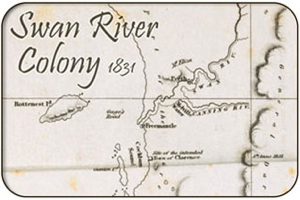
LAND OF OPPORTUNITY: THE SWAN RIVER COLONY – Margaret Scott

Another brilliant piece from a GUNNAS WRITING MASTERCLASS writer

It was an extraordinary decision – perhaps brave, possibly foolish – but certainly extraordinary. George and his wife Elizabeth were tenant farmers, leasing land near Gillingham in Dorset where they had both been raised, where both their families and extended families had always lived, and where they knew of nothing else. The owner of their Estate died, and government death duties required that the property be sold to pay these dues. The new owner didn’t require tenant farmers and George needed to support his young and growing family. Thomas Peel was proposing a settlement scheme at the new Swan River Colony in Western Australia, speaking of the land in glowing terms and exciting young George with the idea that one day he too could be a landowner. Peel had negotiated a deal with the newly appointed Governor to the colony. If he were able to land several hundred new settlers and their goods on or before an appointed day then vast tracts of land would be allocated to his scheme. George signed up as an indentured labourer, intending to work off his term with Peel before obtaining his own small grant of land. They were, in reality, the first economic refugees or boat people to land on these shores – fleeing a country that no longer offered them a livelihood or any prospects of one for them or their children. They believed the Swan River Colony offered hope of a secure future, and the opportunity to own land – the significance of which was the voting power, status and respectability that brought. Sadly, Peel’s ships arrived late and the Governor had already allocated their promised land to other settlers. Peel’s settlers disembarked on a beach in Cockburn Sound where they established an encampment in the adjacent sand hills that they named Clarence, and began exploring further inland for productive soils in which to grow crops. George, Elizabeth and their fellow families struggled to survive these early months on scant provisions, and as many as forty people died during that time. They were part of a group that finally wrote to the Governor requesting to be released from Peel’s indenture scheme that had obviously failed, and asking the Governor to provide an escort of soldiers to assist them to walk to the Perth settlement and establish themselves on land there. Hard working and enterprising from the start, George worked as a sawyer cutting timber and soon earned sufficient money to buy a plot of land near the river in Perth. The family all helped George build the first 4 roomed cottage in the settlement from local timber cut on Mt Eliza (later to be Kings Park), and clay and shale they collected in boxes from the hillside to mould into rough, rubble walls. They had become landowners a world away from all that they had ever known, and they would not look back.

Go Back

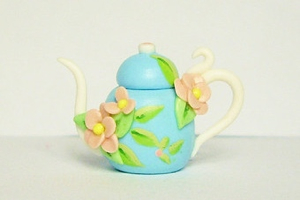
The Teapot Secrets – Helen Lane

Another brilliant piece from a GUNNAS WRITING MASTERCLASS writer

She left me a teapot. In her will, a teapot. I was never under any illusion that she would leave me anything of financial value – her house, that collection of Russian Eggs that I had always admired as a child or Granddads war medals – ‘Hannah gets the teapot’, like it was a prized possession that would have be fought over otherwise. At least I got a mention, which is more than can be said for Aunty Marg – her own daughter.

We had shared many cuppas with that teapot over the years. I remember running over to Nanna’s when I had fought with Mum as a teenager, again and again. Nanna made tea, with leaves, in that very teapot. It wasn’t just a soothing beverage, it was a ceremony; spooning in the tea leaves, waiting for the whistle of the kettle being brought to life by the wood stove, the bubbly sound of boiling water being poured into the teapot and then we would wait for the water to turn the perfect shade of reddy brown. In that suspended time, there was only silence. My day of noise and chaos was quietened, my rant about Mum dissolved. My Nanna in her apron and perfectly set hair taught me patience, tolerance and love of all things simple without ever saying a word.

There was history in that teapot. It was given to my Nanna by her Nanna. It had survived the Great War, the civil war and family wars. It had endured horse rides, boat rides and car rides. It had to be over 100 years old and despite the fading of the little pink flowers, the delicate, pale blue, china teapot had survived. I carefully marvelled the antique bequeathed into my care. I turned it upside down to read the faint markings of its maker, when a letter fell out. Folded neatly and some pages in length, it was addressed to me. In shaky cursive blue pen, Nanna had started the letter with ‘Dear Hannah, I thought now might be the time to tell you a few truths about our family. The things we were never to speak about’. Looking back, I wasn’t ready for what was about to be revealed.

Go Back

Cone – KLD

Another brilliant piece from a GUNNAS WRITING MASTERCLASS writer

He lays still and quiet, beautiful in his nakedness. The white of the sheet pops against the dark of his skin. A tradesman’s tan, all sleeve, short and sock mark. Too many hours on rooftops, placing tiles in lines. All ratbag and ruin on his face, he has the look of a man easy to smile. A fierce cleft divides his chin.

What is with that tattoo that winds its way up his thigh?   A snarling tiger, lurching upwards. Serious ink and serious hours. The surgeon has botched it. The sutures are meticulous, but the tattoo is now misaligned. It wouldn’t have even crossed his mind in the early hours of the morning when he pulled this man together. So very Humpty Dumpty. I pull the sheet back over his legs as his wife tells me that it has just been re-inked.

I gaze away and my eyes drift back to the monitor.   On paper he is pristine. The lines are straight, the numbers textbook. It’s all smoke and mirrors. A fucking disaster. He is dead. She has been sitting for hours, dumbed down with grief. Willing him to live and asking me for reassurances I cannot give. His chest rises and falls. He is warm. The dead don’t look like this, I can see her thinking.

She is pleading with her eyes. “They are wrong, please help me. Do something. Can you do something? Please. Please. PLEASE, DO SOMETHING”. Her pain ripples raw and visceral. She slowly spins his wedding ring, and then buries her face into the warmth of his palm.  I walk towards her and touch her then. No words come, there are none to say.

Go Back

Teddy Bears and Tobacco – Inez Carey

Another brilliant piece from a GUNNAS WRITING MASTERCLASS writer

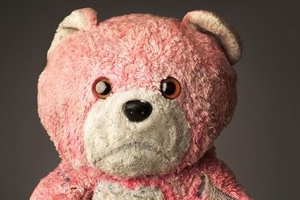
Thadius was a dirty old man with a penchant for cheap tobacco and three-limbed teddy bears. He lived alone – obviously – whiling away his days working on his back under a 1930s Ford tractor. “Just tricking it up”, he’d mutter to himself with spanner in hand and the radio crackling. Of an evening, he’d trot in to town to work the petrol bowser for a few hours at the local Stop n’ Go. Thadius preferred the bowser to being inside behind the counter. Less conversation out front and more chance of finding some dropped, forgotten object. Out front was where sleepy kids were dragged from the back seats of station wagons in their dressing gowns and plonked on the badly-lit toilets whining “Muuuuummm!!! I don’t need to go”, as Mum barked back, “Just go! This is your last chance. We’re not stopping again”. And with all that going on behind him, Thadius would be collecting the strewn blanket, the slipper, or the occasional and much-coveted furry friend. As the family members returned to the car with milkshakes and chocolate bars and sausage rolls either limp or rock-hard depending on the time of day, he’d make a choice about the fallen-out items – whether to hand them back or hide them in his stash in the small bucket next to the bin. The bucket was not marked for rubbish.

If he’d felt like sharing it with you, or speaking at all, Thadius could tell you that the biggest treasures did not come from the wealthy cars that had four matching hub caps. In these cars, and these families, toys were replaced every six months – quite long enough to endure the gathered-up germs and just the right amount of time to get slightly bored as the next generation of plaything burst onto ad breaks and store shelves at three-foot high eye level. No, for Thadius, the scores were to be had from the low to middle-income families wedged into a monthly and weekly and daily budget that did not allow for the replacement of toys. In these families, kids fought doggedly with their parents to cling to the matted, soiled, one-eyed bears with a foot or an arm missing. The bear that had been with them when their baby teeth went to heaven, when their first nightmares wrenched them screaming from sleep, and plonked alongside them through the transitions from home to kinder and kinder to school. These little soft tale-carrying troopers of childhood bought out the real spirit of a kid as they screamed and willed their parents to die at the very suggestion of washing Mr Jack or Froggles or Judy the Panda. For these kids were like hawks about their bears and they knew that when teddies went for a ride in the washing machine, particularly at night, they never EVER came back. These kinds of teddy bears only ever fell out of grasp in the drunken-petrol-daze of a long car trip, under the glare of a fluorescent street lamp and the gaze of the dirty old man.

He hoped to do something with all these broken, asymmetric objects one day soon and before he carked it. In all their furry dismemberment there was a uniformity, a collectiveness. No ice-cream smudged, clunky-headed Cabbage Patch Kids looking like Miley Cyrus on-crack sat amongst his shelves. They formed something of a family these stolen, aggrieved best friends of six-year-olds. But he didn’t want to show them to anyone, or to fondle them or fantasise about them. Nothing as crude as that. For him, there was something heart-wrenchingly poignant in the spirit of these bears that kids had whispered the words of their woes to. In all the stories of childhood, kids rarely get to do the telling.

But no one had ever asked Tad about the bears, and even if they had, they might not have heard him tell it well. Tad wasn’t a loud talker. And because of that, people mistook him for being shy and slow-witted and did not tend to say much of anything interesting to him or enquire much at all into the way of his world. And because of that, Tad would often say “Thank a good goat’s fuck” that he’d avoided another mundane conversation as he turned away from the mum or the dad and back to replace the nozzle in the bowser. And this is why some considered him a dirty old man. They thought his reference to a farm animal copulating inferred something more. At least his wife did last summer when she finally discovered his teddy bear stash – incorrectly putting two-and-two together. Once her pupils had returned to a manageable size in her eyes, she’d spun to him, spat in his face, and walked off the property. He didn’t care, the old hag hadn’t said anything interesting in 42 years. He did wonder though, lying on his bad old back, under his rusty old tractor, if he would ever tell anyone anything new or surprising ever again. And as he wondered, he looked over at the shelves of bears leant untoward and one-eyed watching the dirty old man from the servo.


Go Back

Sticks and karats – Katrina Rischbieth

Another brilliant piece from a GUNNAS WRITING MASTERCLASS writer

Full of inspiration and ideas I returned home to find a stick.

The stick has a pair of big brown eyes that you just can’t ignore and they were pleading with me to take him for a walk. A temptation to be lazy and say ‘but he got walked this morning’ did cross my mind. But a little voice saying ‘remember how good you’re going to feel after you’ve taken Harry for a walk’ was echoing in my head.

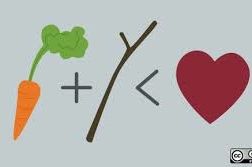
I really wanted the carrot, but to get to the carrot I needed to walk the stick first.

I also wanted to ride the wave of inspiration I was on after doing the Gunnas writing workshop. But it felt more like an annoying splinter getting in the way of the carrot.

The carrot at the end was going to the pub for my friend’s birthday drinks (coincidentally they started at the same time the workshop finished).

So now I had two sticks, and only one carrot.

Dutifully I decided to take the dog for a walk, and take the time to think about what I would write. What could be good enough to send to Dev that she would post on her site?

I had an opportunity to write something that would possibly be seen and read, and it made me realise that this task of writing was not a stick. It was a big fat juicy carrot dangling in front of my nose. I felt like an ass.

So, true to the mining state that I live in, I went mining for gold…or anything slightly shiny and semi-precious. And if I’m going to find karats then I’m going to have to get rid of a few sticks in the process.

Dev gave me a deadline and a Gunnas tea towel on completion that I will wear as a headband. And ninja style I will say ‘fuck it, I’m doing it now’ and go mining for karats.

Thank you Dev for helping me overcome a fear of commitment and some other bullshit excuses.

@risch_kat


Go Back