





Category Archives: Gunnas-Masters

Of Dust and Dunes – Cindy Renate

Another brilliant piece from a GUNNAS WRITING MASTERCLASS writer.

The leather seat burned into her bare legs. She put her hands under her thighs and lifted one leg, then the other. The sensation of peeling the scorched skin from the cream surface decreased in ferocity after a few lifts. She opens the electric window, gingerly pressing the metal button and turns the fancy, multi-directional air-con to face her. Soon the wind is blowing her hair into a brown, tangled mess and she had forgotten the suffocating heat and thoughts of the beach skipped through her mind.

The starts of these trips were always full of anticipation. Two weeks stretched out like a most marvellous prize. Unbelievably lucky that she could go again. Never knowing until the day before but now come to be expected and hoped for. They always were filled with plans of postcards and letter to pen pals. It didn’t matter that she could never coordinate finding a stamp and managing to remember to post them before the two week respite was up. It didn’t matter that they screamed past at a giddy pace, faster than the freight trucks rattled by in the opposite direction. It didn’t matter. Today was first day, the best day of the trip. The day that gave the longest space between home and holiday. There was always a ritualistic element to the trips that she craved. An order, a predictability, an emptiness and quiet, yet with more connection and warmth than any other place or time.

A concerned-looking man steps from a station-wagon at the ghost-town quiet petrol station. Persistent flies come black and thick to claim his face as fresh territory. He is swatting them away as he walks over to the out-of-place car with its fancy hood ornament and electric windows. When the window is wound down he asks if the fancy car has brake trouble. The brake lights are blinking on and off. The kind woman with the tousled hair girl next to her nods apologetically. No. No problem. He says nothing more and wipes the corner of his eye with the back of his hand with a gesture only understood by those who live through summers heavy with flies. The girl looks at him walking away, giving a ride to the swarms clinging to his shirt. And wonders at why her grandmother drove up open highways with her foot touching on and off the brake.

Few words are spoken but time is always given. Time to stop, time to look at wildflowers and weeds. Time that could never be given by those who could not see the purple haze stretched out over paddocks as anything but a weed. She picks the Patterson’s Curse, filling the back seats with blooms and ants and thinks their name so unfortunate and ill fitting.

She settles into the monotony of the trip, takes in the emptiness of the horizon that circles the car and the roads disappear into nothingness. She counts down the country towns, tapping her feet to the endless white posts with reflector strips as they race past.

This trip, like so many before, included a stop in a dreary mining town. Where the sidewalks were wide and the verandas were deep. Where boards across nailed-up windows were thick with ingrained red dust. Where men with felt hats pulled down across their crumpled brows walked in past tired-looking girls in their tiny costumes. Booth-lined streets lit up by neon lights and sequins imprint the scene confusingly. A lesson in lust and loathing given to a girl not yet in high school but feeling very close in age to those shiny, sad girls

A bakery on the hill is a welcome sight after many signposts and pit stops. The smooth concrete floors packed high with bags of flour. The smell of bread and roar of mixers and ovens transports her to another time. A time where she was a fresh baby, watching her teenage mother packing bread into plastic crates from her car seat cradle. Her mother’s lithe frame heaves the full crates into the back of the panel van at 2am, her body still healing from birth. She longs to know her mother then, young with only one child. Young and fierce and willing to climb out windows to escape and race between towns to get her new baby back. Two-week trips full of deserts and dunes let her escape her mother now, aged beyond her years with a turbulent marriage and a houseful of small people, but let her find her mother, discover her by piecing together scraps of stories.

Men sleep whilst kind women prepare the meal. A table laden with food and the girl is delirious with hunger. Always so much food. So much food never tasted at home. Butter and meat dripping with fat. Potatoes so crispy they were too tasty to be vegetables. Two types of forks. So proper and bountiful but tempered with crass jokes and boisterous banter intermittently and unsuccessfully hushed by otherwise quiet women

The girl delights at sitting with adults. At being seen and spoken to. At choosing her own food and deciding her own portions. A freedom so rich. They joke about the girl almost being old enough to leave an oppressive home. Thinly veiled scorn of a mother, far away. She retreats, wishes for bed. Sitting at the table seems to require too high a price.

Soon the red dust melts into flat scrub and scrappy dunes. She inhales the salty air and breathes in space. The ocean is loud and the wind cuts through her melancholy. She watches the kind woman walking on the shore and adores that she waits until every last seashell has been picked.

The house is cold and empty. She unpacks her suitcase and is left to wander the museum of memories not hers but of hers. She opens the wardrobe and taffeta and rayon ball gowns leap out, begging to be touched and twirled around. She pulls glass stoppers of long-abandoned glass whiskey decanters, and skims ceramic balls across faded green velvet tables. The clicks echos throughout the house and she remembers the lonely sounds down here. The sun glints from the crystal light-catchers and reflects onto the carpeted staircase that sweeps off the ground and curves across the foyer. The gold jumps out from the velvet blue and dances in repeating patterns. The girl traces the regal patterns with her fingers as she sits on the bottom step and settles into being lady of a sad, forgotten manor. So close to her history, her stories, but so cut off from them, like a child who can only read the pictures.



Go Back

Perfect Child’s Birthday Party and Excellent scones – Ginger Blue

Another brilliant piece from a GUNNAS WRITING MASTERCLASS writer.

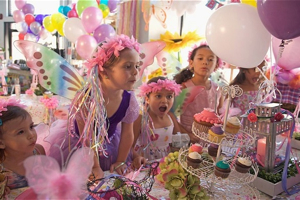
There is a special place in hell for small children’s birthday parties where adult beverages are not offered. Allow me to set the scene.  Katelyn loves her three-year-old daughter Poppy very much.  Poppy is a delightful little girl – she enjoys playing shopkeeper, wearing shoes with purple glitter on them, and spotting the letter ‘P’ on signs.

Katelyn has stayed up until 2am the night before Poppy’s birthday party, painstakingly constructing a birthday cake in the shape of a cartoon pig, which Poppy will absolutely adore.  She has even made her own sprinkles from scratch, entirely free of any artificial colours or flavours, to decorate Poppy’s dairy-free cupcakes.  In fact, the cupcakes are also gluten free and nut free, to accommodate the allergies of Poppy’s classmates.  Because Katelyn, of course, cares very deeply about the small party guests, and wants everyone to have a fantastic time.

Katelyn has worked on a Pinterest board for the past three months, spending her evenings collecting ideas for creative party games, and has made three batches of gluten free, lavender-scented playdough, dyed in pastel shades and hand rolled into small balls, as a take-home gift for the guests, because Katelyn knows that traditional lolly bags have fallen from favour in the eyes of today’s health-conscious parents.

The children who are invited to the party will love it.  They will have a wonderful time because of, or possibly in spite of, the dairy-free, sugar-free frosting.  They will probably enjoy their take-home playdough nearly as much as a small cellophane bag full of cheap lollies.  This is because children freaking love parties, and spending two hours running around on a cold oval with their friends would be fantastic, as long as there was some sort of cake, and it was called a Party.

Unfortunately, however, for parents of young children, birthday parties can be fairly tedious events.  Once children start kinder, and want to invite their classmates, most of the parents don’t know one another very well, and at 10am on a Sunday morning, most fully grown adults would rather be eating bagels and drinking coffee in their pajamas, in the comfort of their own houses.

But instead, these parents have abandoned a lazy morning at home, and have fronted up with alacrity to Poppy’s third birthday party.  They are ready to make enthusiastic small talk with the ever-cheerful Marissa, a mother-of-three who works in Financial Risk Assessment, and who plays netball in her spare time.  They will chat at length with father-of-two Rob, who they have met once, about his new bike and his enthusiasm for the 5:2 diet. They have confidently chosen a thoughtful and engaging gift, their own children have drawn a picture of Poppy in the birthday card, and they have now arrived at the party, knowing that their children will have a great time.

So what is the key to birthday party success for the adult chaperones?  These parents who are spending their precious Sunday morning making polite chit chat with parents they barely know?  For the love of all that is holy, provide either tea and coffee, or alcohol.  Or both, if you are feeling particularly magnanimous. Any party taking place after midday will see at least a few grateful takers for a beer or a glass of wine, and parties that commence at or before 10am will see parents clamouring for a tea or coffee.  It doesn’t need to be fancy.  There is no expectation to provide endless glasses of Champagne, nor will anyone presume to be offered an extensive range of coffee options.  But remember, the child guests will have a ball no matter what you offer, while the adults will be deeply grateful for some sort of grownup beverage.

Oh – and one final piece of advice?  Remember to make an extra tray of sausage rolls.  The big people seem to enjoy them more than the kids do. 

How to Make Excellent Scones.

The best scones are delightfully ugly.  The most tender, light and delicious scones have lumpy sides, and often lean a little to one side.  This is because the best scones are barely handled; rather, they are thrown together with an almost irreverent touch.  Too much handling, mixing and kneading will give you attractively smooth yet disappointingly tough scones.  You should be able to get a batch of scones into the oven within five minutes from getting out your ingredients, and only your fingertips ought to be dirty – and possibly the tip of your nose, if you have an itch halfway through making them.

Turn the oven on – nearly as hot as it will go, around 230 degrees.  You want to shock your scones into leaping up, climbing rapidly to lofty heights.  You want them to rise and brown very quickly, leaving their soft interiors full of moisture and pillowy lightness.

Weigh out 500g of self-raising flour into a large, wide bowl.  Add two teaspoons of baking powder, and a scant tablespoon of sugar, and quickly mix it together.  Weigh 100g of cold butter, and quickly chop it into small pieces, letting them hail down directly into the bowl.  Give everything a quick toss, coating the little nubs of butter with flour, then use your fingertips to lightly rub the pieces of butter into the flour, rubbing each little piece between the pads of your thumbs and the tips of your other fingers, reducing the contents of the bowl into something resembling thick rolled oats sitting in flour.  Don’t fuss too much – it is completely fine if there are some larger pieces of butter.

At this point, pour in 400ml of cold buttermilk, and use a butter knife to quickly and lightly mix it in.  Slosh in more as needed, to create a slightly damp dough.  You may need up to 500ml of buttermilk.  If you have a standing mixer, you can use this on low speed, and gently drizzle in additional buttermilk until the dough looks right.  What you are aiming for is a rough, craggy, slightly wet dough.  It will barely come together, but with floured hands, you can now gently push it out (onto a well-floured bench) to a thick slab of roughly one inch thick.  It still won’t look neat or homogenous.  You don’t need to use a rolling pin – frankly, I think you get better results using well-floured hands, gently pushing the dough into shape.

Using a sharp, round metal scone cutter, cut out circles of dough, first dipping the cutter into a little dish of flour before every cut, as your dough will be quite sticky.  Place these little discs of scone dough onto a baking tray lined with a sheet of baking paper, quite close together – less than an inch apart.

Lightly brush the top of each scone with either milk, buttermilk or a dusting of flour, then slide the tray into your hot oven.  After approximately ten to twelve minutes, your scones will be gloriously tall, lightly golden on top, and the sides will feel ‘set’ if you give them a little squeeze.

Pull the tray out of the oven, and slip the scones onto a wire rack for a minute or two, so that their bottoms don’t get soggy.  While they are resting, set your pot of jam on the table, and quickly whip some thickened cream into voluminous peaks.

Split each scone, slather each half with jam, pile on some cold whipped cream, and eat with a pot of tea on the side.


Go Back

Listening to Sunrise – Sue Ramsey  

Another brilliant piece from a GUNNAS WRITING MASTERCLASS writer.

I’m sitting on a beach and the sun is on the edge of coming up. It’s that time when you can’t work out if the sky is black or the darkest shade of indigo. The light shifts; the cold is coming down; like a reverse dew point.

Why is it always cold before dawn? What shifts? Is the earth like me? Does she want to stay snug under the downy blankets of the soft night; warm and silent and dreaming of unexplored reality?

I watch the stars and search and search for the Pleiades. They are the seven sisters of many cultures. As I sit on Kulin lands, the sisters are Wurundjeri. They were seven sisters who had the gift of fire and were ticked by Waarn the crow into giving him the fire. They were then taken up into the sky where their glowing fire sticks became the Pleiades*. Are they happy in their new home? I wonder what they are trying to say to me. If only I could hear them speak.

The waves lap gently on the beach. The tide is out and there is little wind. It’s that stillness that comes with the cold before dawn.

The birds begin to stir and tweet as the deep indigo sky starts to imperceptibly lighten and the middle world of consciousness moves to return to the awakened states of dreaming. But all is yet still. It is a liminal time – not one thing nor the other.

I recall being nineteen and looking out a bedroom window in Parkville at 4am. It was a cold August night and the streetlights pooled below the sodium lamps; the light split and shattered by the ice crystals in the fog. I felt suspended in an alternative reality which I never wanted to leave. Where time stood still and I could be anything I wanted. And I wanted.

Yet I was suffocating in a noxious cloud of existential sadness believing that I was trapped by a future that I couldn’t grasp. Time proved me correct. I was too young to understand the need to fashion my being in the image of what I chose to be.

But enough of that.

I am watching the lights of the container ships cutting up the south channel. I contemplate where they have come from: Shanghi, Singapore, Shenzhen, Rotterdam, Bremen … the list is endless. I see industrialised ports working 24/7 in a haze of artificial light with noise and ceaseless activity. Straddle cranes, trucks, officious customs officers and the luminescent energy of wharfies who went home from work in a pine coffin.

It’s more romantic when you don’t think of that. I will instead contemplate George Johnston writing about the liners coming up the Bay in the 1930s. They emerged out of the sea fog, bringing a hazy ephemeral umbilical cord from ‘home’.

I am so distracted from my thoughts about the earth and the lightening indigo sky that I continually throw myself out of the liminality that I crave. The lost liners of the 1930s in their pre-war deco glory speak to me of the broken lines in communication and the small cracks in relationships that grow into chasms that can never be bridged.

These liners, long gone by torpedo or the blowtorch of ship breakers, evoke the musty smells of the slow decay of old Europe; much like the moldering pool at Ripponlea. The change rooms smell of the rot of the old – like they will never be quite clean. The creepers grow though the cracks in the windows and thrive in the humid half-light.

Europe. This is where my ancestors came from. I don’t think they considered the decay. They just wanted a new life somewhere else. They landed not far from where I am sitting in the dense cold of the morning. The coastal salt scrub of Point Ormond would have seemed exotic and dangerous. I feel safe and encompassed by the scrub surrounding me.

It’s 5am and I realise that I don’t know them. Yes – an absurd realisation as they were long dead when I took my first breath. Yet I don’t know them in their Englishness and their transplantation of ‘home’, half way around the world. Would they recognise me as one of them? I doubt it but that doesn’t worry me.

I am displaced from those who bore me, whose genes I keep alive. I am sitting on Country that they wouldn’t recognise in a time and place that would make no sense to them. I am not them. Who am I in relation to my ancestry and to time as I walk as if a blind woman through my days?

The sun is starting to spill from the east and the stars have all but retreated. The ghostly liners have vanished and I start to hear the garbos and the street cleaners on their morning rounds.

If I ignore the sounds of the city awakening, I hear the wind as it picks up, kicking off the water. I hear something but like the song of the Pleiades, I can’t quite understand what it is whispering. The saltbush rustles and the paperbarks creak in the cool breeze as the earth begins to awaken from her slumber.

And that is what they say. “Awaken from your slumber. Don’t try to hear my voice but listen to my thoughts in your heart. We were here before time and we will be long here after you are forgotten. Don’t sit staring into middle distance and parley with me for time; that will only see you safely to oblivion. You have what you need.”

“Listen to the call of the Pleiades, dance and sing and write and riot and don’t take refuge in that old room at 4am. Don’t take refuge in anything. Burn up in the brilliance of existence.”

So, on the beach as the sun is flooding the new day, I must hasten to attend to my dreams, listen to the wind and the waves and the sea as it crashes on the breakwater and the sun and the moon and frolic amongst the stars. But I will always come back to sit in the liminal time where nothing is quite as it seems and the sky is moving from velvet black to indigo satin.

* Mudrooroo (1994). Aboriginal mythology: An A-Z spanning the history of the Australian Aboriginal people from the earliest legends to the present day, London, Thorsons, 35–36, ISBN 978-1-85538-306-7.

Go Back

Our grandmothers guard a wealth of untold stories – Anni Moss

Another brilliant piece from a GUNNAS WRITING MASTERCLASS writer.

I went to lunch with my grandmother and two of her friends at the local RSL recently. We went to play the pokies and enjoy the $9.95 seniors menu. This is not an uncommon occurrence but for some reason the conversation on this day stayed with me long afterwards. We often think of old ladies in fairly simplistic terms. They stereotypically like their knitting, a cup of tea (lots of milk) and bake a great scone/tea cake/chocolate chip cookie. Perhaps on this occasion I actually listened to them or perhaps they were more candid then usual, but I came away with the acute realisation that they exist in a world that is completely alien to mine. These women have experienced so much. In between stories of incontinent late husbands, haemorrhoids and hernias they throw in casual references to recently dead friends or those still languishing in nursing homes. I discovered that between them they have nursed four dying husbands, two sisters, a brother and helped to nurse countless friends. Despite this all three had a wicked sense of humour. They joked about blow jobs (“oh I couldn’t, I’d ek, I’d ek”), how difficult it is to wipe up after a trip to the toilet when you have haemorrhoids and how they were trying out online dating (“I’m looking for a friend WITHOUT benefits”).

I was fascinated. How, having witnessed and suffered so much misery were they able to continue to face life, and their not so distant death with such humour and courage? The familiar Nana that I had grown up with started to take on new dimensions. Somehow I had never considered this before. Elderly women are invisible in Australian culture. I have never read a book by or about a woman of this age. I have never seen a movie or watched a TV show that has an elderly lady as the leading character. I have so few reference points. Then another thought struck me, with startling clarity – if I live long enough this is going to happen to me too. Statistically speaking women live longer than men and more often than not it is women who take time off work to care for elderly relatives.

How does it feel it be nearly 80? To not just outlive, but nurse one or even two dying husbands on your own. To lose a son, a best friend, a brother or sister and support your friends through their own losses. To have collections of equipment in your home for when the next person you love needs to be nursed. Bed poles, commodes, walking frames and boxes of medications to lower your blood pressure, raise your iron levels, lower your cholesterol, soften or harden your stools as the need arises. To visit friends and relatives in nursing homes and know that you too are getting older. To watch them waste away, looked after by staff who don’t seem to care in an organisation that seems to be more of a business than a care facility. To know that you are closer to death than birth and to know intimately what it means to die. To have lived with a partner for fifty years and lose him. To watch him slowly fade away as dementia steals all the particular special things that made him who he is, that you loved. To have had a busy loving family who needed you for such a long time and wake up one day to find yourself alone in your house. No one to care for and no one to care for you. To go to family dinners and events and feel like you and your opinions and experiences are no longer relevant. You are from a different era. To have your family start treating you like a child.

There are women like this everywhere. Mothers, sisters, wives, grandmothers. They have spent their lives doing all the unglamorous unpaid caring work that goes unnoticed. Raising a family, caring for relatives. They get up every morning, pull on their comfortable slacks, sensible non-slip shoes, white singlet and a blouse they got half price at Harris Scarf. They vacuum the floor that only three people have walked on this week and wash the two dishes from their dinner last night. They start giving away and donating the things they don’t need any more. “Can’t take anything with you where I’m going.” my Nana often says.

These women find the time and caring and the fucks to give about the countless, trivial problems of their children and grandchildren and then quietly go and have a mammogram, a mole scan, a blood test. Simultaneously preparing for death and doing their best to delay it. They unanimously agree over lunch that they want to go quickly. A nice stroke or a heart attack. They lament that voluntary euthanasia isn’t an option and then in the same breath tell me about how one of them took their terminally ill husband to a sex shop for the first time while he was still in a wheelchair. With the three of them cackling, the kettle is put on again as some more chocolate slice is retrieved from the fridge.

These women know how life starts and they know how it ends. They can reconcile the inevitability of death and illness whilst finding the motivation to get up every morning and face their lives with hope and love. I want to know how they think. I want to know what they think is important in life and what isn’t. What they would change and what they wouldn’t give up for the world.

I resolve to come back and start recording their stories.

Go Back

A Girl Compromised – By Elissa Wilson

Another brilliant piece from a GUNNAS WRITING MASTERCLASS writer.

Once upon a time there was a girl who was born too early. She was born at a time when women wore corsets, never spoke their minds and certainly did not do anything to improve their minds.

But this girl was born smart, funny and fearless. She refused to compromise these parts of herself, her being, for anyone. Her parents tried to tame her early on, but she climbed the tallest trees, read the greatest books and sung at the top of her lungs. She loved to play the clown when visitors came by, which of course caused great embarrassment to all of her family.

Every day she would be told, “Don’t”. “Don’t get your clothes dirty”, “Don’t mess up your hair”, “Don’t scream”, “Don’t run”, “Don’t be you”. But she never compromised. No matter what they said or did; she would not break.

Until one day, when she was about nine-years-old, her craggy old aunt told her about an evil sorceress she had heard about, who was going around the town asking where she could find girls with spirit. The sorceress planned to trap these girls and use their souls for a magic potion that would give her eternal youth and great power that would eventually destroy the entire town where the girl and her family lived.

From that point forward, the girl with spirit compromised herself. You see, despite the constant nagging she had received from her family she still loved them dearly and did not want to see her family and friends destroyed. So because of that, she slowly conformed and grew into a compliant young woman. And a sad young woman. She bit her tongue whenever she felt an argument rising from her chest; she gripped her chair whenever she saw her brothers running off to play games and climb trees; and she simply jiggled her leg whenever she heard music that made her want to dance with joy. And because of that she became quiet and withdrawn.

Now her parents started to worry even more than when she had been her true self. Their previously healthy and happy young daughter was now the saddest young woman they knew. They tried everything they could to bring back the daughter they once knew. They tried making her laugh, they tried encouraging her to read and learn new and exciting things, they tried to make her play games and sing with her brothers. But nothing worked.

Until finally the old aunt confessed to the untrue story she had told the young woman when she was just a girl. Her parents were elated and immediately set about convincing the girl that in fact her old aunt had been the evil one and there was no sorceress. They reminded her of the vibrant and spirited young girl she had once been and pleaded her to return to her old self.

The young woman’s response was immediate. She let out a guttural, primal wail that quickly turned into the most beautiful song her parents had ever heard. It was as if she was releasing every part of her being that had been compromised by her aunt’s evil tale. The woman that emerged thereafter was strong, happy, and intelligent and every bit as powerful as any imagined sorceress could ever be.

Go Back

Cooking is like shagging – Emma Dean

Another brilliant piece from a GUNNAS WRITING MASTERCLASS writer.

Cooking (and eating) is like shagging, you are going to be doing it for the rest of your life so you might as well get comfortable with it and do it ‘well’.

Construct that novelty cake, well

Have a fancy high tea, and do it well

Cook that damn roast, well

Make that bloody pav, well.

And the meaning of ‘well’, well for me, means jumping in and having a go, because you are doing it SO MUCH BETTER than those who are not doing anything. So many people are paralysed by expectation, that they don’t even have a go and do something, take something, bake something, make something.

Cooking that novelty cake to look like a pirate ship, and the end result is a massive pile of chocolate with some tiny teddies holding each other hostage? That’s done pretty damn ‘well’. Done even more well if you get some kids to help you and they have a most awesome time with their tiny teddy hostages!

Having that party that starts off as a high tea and end in margaritas and nachos? I reckon that’s a high tea gone pretty darn ‘well’. Done even more well if you pull a pulled pork out of the oven at 4am! Way to keep a party going!

That roast chicken that you did on the BBQ rotisserie that got a bit, how would you say…’burnished’?  Stuff some butter under that skin with a bit of tarragon, and season, season, season…Yup – done well!

That pav that had a massive crack which you filled with cream and dumped a whole lot of strawberries and passion fruit pulp around to look ‘restaurant ready’? Use free-range eggs and you got it! Done well!

Chip salad? Salt and vinegar crinkle cut, twisties, and burger rings artfully tossed together? I learnt about this phenomenon today and I reckon its genius! Make it the best bloody chip salad EVER and put it in a nice bowl – presentation is everything – and yup – done well!!

Make your kitchen, the little kitchen that could. Chuck out anything that annoys you, make your space pleasant to be in. Learn the basics – get 5 dishes that that you are really good at. This could be the awesome toasted cheese sandwich that you can bang out the morning after the night before with your eyes closed or a butter poached sous-vide fish! Just own it!

Remember, you are doing this for the rest of your life, and like shagging, it’s best you do it well, whatever that may be.

Twit Insta Facey @emmadeancooks www.emmadean.com.au


Go Back

A LIFE NOT LIVED –  Liana Papoutsis

Another brilliant piece from a GUNNAS WRITING MASTERCLASS writer.

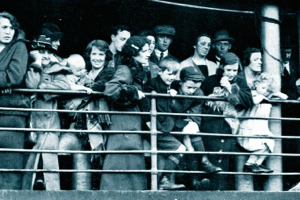
He didn’t live the life he wanted. He was only twenty-five years old when he boarded the “Patris” in Piraeus, Greece to begin a forty day journey which would take him through the Suez canal, into the Indian ocean where no land was to be seen for days on end. Finally, the ship docked in Fremantle. It was late November, spring, quite a warm day and he likened it back to his homeland, the one he had left behind, which in late spring was warm and dry. This made him happy, Australia’s spring felt like Greece’s sunny, spring days. However, Fremantle was not the final destination; Melbourne was and a few days later the “Patris” docked in a dreary and chilly Melbourne.

Port Melbourne, Melbourne’s busiest port in the 1960s had seen thousands of young newly arrived migrants arrive with stars in their eyes and a hint of trepidation in their faces. The chilly weather startled him, Fremantle was so different a few days ago, Melbourne was in Australia he thought, and this contrast in the weather was inexplicable.

The busyness of disembarking and meeting up with a distant aunt distracted his thoughts in relation to the weather as there was a new life to forge, people who had migrated from his town in northern Greece prior to him were keen to catch up with the latest arrivals so as to hear news of loved ones back home. He was excited to see his new home, a room he would be renting at his distant aunt’s house.

The quietness on the streets was disturbing. It was a Sunday, where were all the locals? Why were the streets empty? What did people do in Australia on a Sunday afternoon? Back in the town, rain, sun, or snow, the streets were full as were the coffee-houses, children ran in the streets, the elderly gathered together after church.

It was November 1966. After a few days rest it was time to start work. There were jobs aplenty and a job had already been lined up for him by fellow townsfolk in a factory in Port Melbourne. He would say, “if you did not like your job, you would simply walk out, go next door and more often than not, get a new job on the same day”. Things were different back then. Australia was growing rapidly, labour was needed and he, a part of the massive migration boom after World War Two became a part of this extraordinary period in Australia’s migration history.

The work was fine, but the language barrier a tough obstacle. Working with a lot of fellow country men & women did not help with trying to learn English when all day Greek was spoken at work amongst Greek migrants. Why didn’t he learn English after work? Go to English classes? No time for that either as he used his musical training prior to migrating to start an after-hours music school and a band which catered to the ever-growing Greek social events which were held on Saturday nights. You see, the plan was to spend five years working hard and to then return back to Greece.

Twitter: @LianaPapoutsis

Coach-Trainer-Speaker

Go Back

Just write! – Carla Martins

Another brilliant piece from a GUNNAS WRITING MASTERCLASS writer.

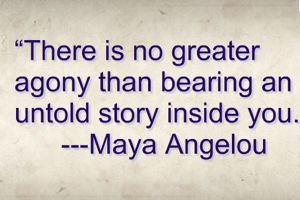
I don’t know what to write. I do know that I must write. So many stories inside of me to be told, thought about, bubbling away forever, but in the end I am afraid that there is only one.   The story I have avoided telling, the story I have never told.   I think of it often, much more than I want to. There are reminders everywhere. In relationships, a fleeting memory, at the edge of a dream. Sometimes more tangible. Like in an unopened email attachment that has sat there for over a year. Or those papers in a box hidden away in the cupboard.

Why does this story remain untold? All of the usual suspects, I suspect – the fear of who else will read it, what will they think, of it and of me. The fear of getting inside my own head and becoming trapped in there. The fear of moving backwards when I have spent so much time moving forwards. Fear, fear, fear. The fear I feel everyday, even though I don’t really look at it. Hidden by the other fears that stops me from thinking about this Fear.

I’m good at not looking. I distract myself. I obsess about the germs on the seat of my pants, picked up out there somewhere. Visualise them transferring from my pants to my couch- my safe space. I track those germs, where will they go next? Who sat there? Where have they taken them? At what point can I stop worrying, tracking them? Are they alive? How long do they survive? What germs where they anyway?

More distractions. I avoid bridges when driving. If you drive over them, I will hang on and keep up a dazzling internal monologue to soothe myself. I can turn a 10 minute car ride into an epic journey, bypassing all bridges. So many bridges. Over freeways, trainlines, other roads, oceans. So many to avoid. It consumes me, tracking them, predicting them, avoiding them.

Where did this all come from? It’s the spillage from the stuff not easily hidden inside my head. The stuff I try not to see, but still know to fear. The fear that feels like quicksand. Struggle, don’t, fight, don’t, rest, stop, go. Haven’t I conquered? I feel like I have, that I’ve indeed won so much. But still it’s there. I feel it spreading.


So let me write it, this story, the real story. Let me tell you about it. Because, I don’t. I tell you the other stories, the ones I know will seduce, captivate, enrapture. I tell you about it and you urge me to hurry, that you can’t wait to read them. But would you be fascinated with the real story? The one I really want to write, the one that might just come out if I stop this procrastinating, if I just sit down and write. Would you be fascinated with me?


I may never write the book you want. I fear I can’t because it’s not the right book. It’s not the book that drives me. It’s not the real story inside of me, the one I keep hiding under other stories. But don’t despair. It may only be a bridge away.

Go Back

How Can I Help? – Liz Mutineer

Another brilliant piece from a GUNNAS WRITING MASTERCLASS writer.

The Universe feels very interconnected sometimes. In the past few days grief has dominated my thoughts. In particular my thoughts have been occupied by how to comfort someone when they are in pain. And today I met three women who seem to be hurting, deeply.

At work the other day I saw Paul and knew something was wrong. He was different, vacant looking. He’s working this year to save up money to explore America with his best friend, his lifelong buddy. They leave in a month. I ran into David who told me. Then I ran to Paul. His friend was hit by a car the previous day. He didn’t make it. Hearing Paul say the words, looking into his eyes that were dimmer than I’ve ever seen them I would have done anything to be able to place my hand on his chest and heal what I envisaged as a black void. A deep, empty, soulless space. A black hole of barely comprehended sadness, the shock and disbelief still mingled amongst it that had sucked all the light from his eyes.

Because I love to read, my first thought was of all the books, words, authors, songs, that have helped me. Nothing seemed appropriate. Some things don’t heal. Sometimes you have to wake up every day for years with the stomach sickening emptiness that makes you feel like living moment to moment isn’t truly feasible. This type of grief takes its toll.

I’m going to see Paul this week and I still haven’t decided on the right words. One of the ladies referenced above mentioned memorising poetry as a remedy for grief. She spoke of Shakespeare’s “Shall I Compare Thee to a Summers Day?” That’s one I’ve actually memorized. It’s sweet and loving and certainly readable as a eulogy, a tribute. I don’t think Paul is there yet. His friend got hit by a car. He died and nothing can make that okay. “Veronica Decides to Die” once saved my life. Maybe that will work?

Later in the day, with Paul’s sadness bruising my heart, I sat at the train station waiting for an Upfield line that I fervently hoped would materialise. The possibility that it would simply never arrive is very real. My view of the platform opposite was obscured by the crush of people trying to get home. The woman next to me was having a conversation so loud I could hear it over my audiobook. She stood up suddenly, shouting, and I glared unsubtly at what I assume to be the beginnings of a scene. It is when I hear other people’s screams join with hers in a growing cacophony of panic and distress that I ripped the headphones from my ears and, being very nosy by nature, push myself to the platform’s edge. For a split second I am in limbo, I don’t understand, and then I do. There is a girl standing on the tracks, a fact made horrifying by the oncoming train. People keep screaming and I hear myself from a distance yelling “NO” as I run for the escalator. The atmosphere changes and a cheer rings out as a young Indian man with a baby face jumps onto the tracks and hauls this slip of a girl back on to Platform 6. The horn on the train is still blaring, joined by the girls screams as she fights with her words and her fists and her anger to escape the unwanted hands of her saviour and get back in front of a train.

I run up the escalator with my hands over my ears like a child trying to block out everything that’s scary about the world, but with an adult compulsion to do something, anything, to help. I know the station is covered with met cops but I can’t identify a single one. I run to the first person with a metro uniform and tell him to call the police because there’s a girl on the tracks, well… she’s off the tracks, but I don’t know for how long. He takes an interminable minute to process what I’m saying. I can see him assessing me, unsure whether to listen, whether I’m telling the truth. “The police” he nods and turns from me. Terrified of what I might find I head to Platform 6. The girl, her name is Cindy, continues to fight the now three men desperately trying to anchor her.

Cindy’s arms are a mess. She’s cut them to pieces. Not too deeply I notice, but the cuts are not superficial either. She’s on the floor, bent forward, and I kneel down, and she’s fighting, and I look her in the eye and I promise her it will get better. She quietens for just a moment and looks at me. So I just keep lying. I coo to her like she’s a fraught and colicky baby. I tell her life will improve, pain can be lessened. Her grief, for that’s what it is, is red hot and desperate and I wish I had a hand of cooling balm I could plunge straight into her chest to soothe the red hot, burning, overpowering grief.

I tell her I’ve been where she is and try desperately to think of what someone could have said to me. She’s so young, maybe sixteen. And I don’t believe she truly wants to die and I know she’s hurting too badly to live. She has a roaring heart, only the lion in her chest is wounded. The police come, officialdom in blue. Cindy is handcuffed and the Indian man with the little boy’s face is sitting there, holding her hand and stroking her hair. He is pure love and in that moment I love him back.

As I walk away, hot and tearful, I can’t hold on to that kind and beautiful man. All I can think I that I’m a liar. Things get better, and then they get worse. I promised her it was worth living. I promised her and she heard me and I hope to God she believes me. Because on my worst days I don’t know that I do.

Go Back