




Category Archives: Gunnas-Masters

This dress, from her, via you, to me – by Emily Kratzmann

Another brilliant piece from a GUNNAS WRITING MASTERCLASS writer
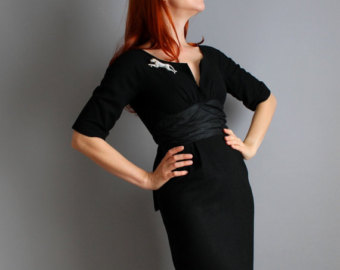
il_340x270.509473456_kd01We sat down to dinner – me, Celia, Pete and the boys – and started to eat. It was strange to see my usually cool, calm and collected older cousin so flustered, faffing about with cutlery and salad and setting down plates. I remembered her being so poised and graceful when I was a kid, but I could see her becoming more and more like her mum, and mine. A family trait, I guess.

We’d just started to eat when an alarm went off on her phone. “I set alarms for everything”, she exclaimed, opening her phone, to the groans of her husband and sons. “What’s this one for? O, it’s telling me not to forget to show you something. I’ll get it after dinner.”

I was intrigued.

The boys ate loudly, bickering amongst themselves, subconsciously offending their mum about the too-spicy chicken and the rubber-like prawns. I always feel out of place at family dinners like these. Even when we sit down to eat at home with the girls, it’s never this stilted or uncomfortable. I guess Celia’s family don’t usually eat like this either. I had another sip of red wine.

After dinner, the boys cleared the table and Celia and I sat down to talk. How long has it been?, we wondered aloud. Four years? Six? The last time I was here was for Tasman’s birthday and we made a cake shaped like a blue-tongue lizard.

“I have to show you the thing!” Celia cried, jumping up from the couch and disappearing into the front of the house. She returned with a black dress and jacket, hanging together on a wire coat-hanger.

“This. My mum made it for your mum, isn’t it beautiful?”

Anything that connects me back to my mum is beautiful. It doesn’t matter whether it’s a handmade dress or an old diary, or the hand-written note under the lid of the piano at Dad’s house. Knowing that it’s something she’s touched or written or been enclosed in, it always takes my breathe away. It’s why I’ve never been able to get rid of the old writer’s festival t-shirt she died in, 18 years ago. Rich once pulled it out of the drawer, with a ‘WHAT’S THIS??’ and I’ve never felt so protective of anything in my life. I snatched it off him and placed it – folded it – back into the drawer. “It’s nothing, it’s Mum’s, it doesn’t matter.”

I touched the sleeve of the jacket, not sure if Celia was showing it to me simply to show me, or if she was giving it to me. It should have been mine, but you can’t be presumptuous when it comes to family, and history, and handmade dresses, from one sister to another.

“Mum gave it to me years ago, and I’ve worn it a few times, but it’s never quite fit. I feel like the length isn’t quite right. I find the wool really itchy and it’s a bit tight across the front and cuts in a bit, here,” she pinched the tanned wedge of skin at her armpit. “Try it on.”

There’s something not quite right about trying on a woollen cocktail dress and jacket in the middle of a Perth summer, but I would have tried on a diving suit and helmet, if I knew mum had been in it.

The zip was sticky, the lining frayed and the fabric slightly moth-eaten. “It’ll need a bit of mending…” Celia said, as I wriggled myself in, pulling the lining and the dress over my hips. I zipped up the back. Manoeuvring myself into the jacket, I was careful not to push my arm through the tear in the lining. But once it was on, it was as if my dear Aunt Heather had made the dress for me.

Celia stepped back. I looked down and smoothed down the fabric over my front.

“It fits. It’s not too tight. It doesn’t cut. It’s not itchy. It’s beautiful.”

My aunt had made it for my mum in the 1960s, from a Christian Dior pattern. It’s a sleeveless dress, with a woven trim around the neck and a pleated detail at the waist. It came just below my knees – where it would have sat on mum. The jacket is cropped, with three-quarter-length sleeves, three woven buttons and a wide collar. I could almost see mum wearing it, with court shoes and nude stockings and a patent leather handbag. Her short curly hair would have been tamed with a few bobby pins.

“You should have it,” Celia said, “You’ll get way more wear out of it than I will.”

We spent the rest of the evening drinking tea, eating shortbread, and talking about our kids and our parents and life. Books and TV shows and movies and pets. How hard it can be to motivate teenaged kids and how tough it can be when you see them wearing too much fake tan and having to keep it to yourself.

Before I went to bed that night, in the stuffy spare room at the back of the house, I carefully packed the dress and jacket into my suitcase. Folding it between skirts and t-shirts so it wouldn’t get creased. Wondering when I would wear it. Would I tell people its story, who made it and who it belonged to and where it had been for all these years? Or would I wait for someone to comment on ‘that beautiful dress’.

When I got back to Melbourne, I had breakfast with my dad at a busy café on Rathdowne Street. When I mentioned the dress, his eyes filled with tears, and he clasped his hand over his mouth. “Yes, yes, of course I remember that dress. Mum wore it the very first time we went out together.”
Go Back

Six Whole Years – Sonya Goldenberg

Another brilliant piece from a GUNNAS WRITING MASTERCLASS writer

my_happy_home..jpg_480_480_0_64000_0_1_0It started when a singer touched our hearts

An online group, a pilgrimage devout.

Two thousand miles would still keep us apart,

You shy, me young, neither had quite come out.


A year of webcams, crying in airports.

You move! We share our time, though not your place

For here’s my youth, my umbilical cord

And there go plans, and there goes our embrace.


When we found our way back, our lives were freer

Our trust regained, after a healthy wait

Then tried to buy a house, a wasted year.

It’s time, at long last, to cohabitate.


So six years on: a lease, a pen, a drawer.

I think we can commit to one year more.

Go Back

Gunner and Gunna’s – Leisa Bowness

Another brilliant piece from a GUNNAS WRITING MASTERCLASS writer.

053 url“Do I need the umbrella” I called out from the cupboard in the bedroom to Gunner who was in the lounge. “Whaaat” was the response. I walked out of the cupboard to aid communication, because I think I learnt about that in a class somewhere, talking to people from the cupboard may make communication difficult. I had the umbrella in hand. Repeat “Do I need the umbrella”, waving it around in front of me so I could add a visual cue into the conversation. I learnt about that somewhere too, that showing people things helps to understand. He looks at me, the umbrella, and then down to my boobs. Response “That’s a great top where did you get that?”. “I got it from Myers when I went into town on Wednesday, what about the umbrella”. He responds “where did you get that from” – he’s referring to the umbrella this time, not the top. “It came with the cupboard” I explain. “Oh yes, it will be drizzling and miserable so you’ll probably need it”. By this time I can see now out of the hotel room window that yes in fact it is drizzling and yes it is miserable – so now I know that I need the umbrella. I think I learnt about that in a class sometime that seeing for yourself will help you believe.

I’m in an unfamiliar town and I need to get around on a tram. They don’t have trams where I come from, but Gunner is the expert. He’s done the research, got the MiKi’s ready, know’s which platform to go to, where to change trams, where we are going and what stop we need to get off. I read a book about that kind of thing, that it is always a good idea to know where your going when you’re in a strange place. On the tram, transfers successful, we are now on the No.1 heading to Carlton. “Where do we need to get off?” I ask eagerly. “It’s the stop near the cemetary” my expert replies. Ok, so now we know where we are going.

Happy, sit down and relax for a few minutes. I take a photo of Gunner to pass the time and we are having fun spending time together. I’m looking out the window of the tram, it’s a great way to see things in a new town. I read about that in the paper one time the benefits of public transport. I spy the cemetary and let Gunner know. “Oh yes we are close now, I think it’s another two stops”. Stop approaching, I’ve got the MiKi out ready to swipe, doors open, we disembark. Out we go onto the road and into the miserable, drizzly weather which has now well settled in, and I’m pleased with my decision to bring the umbrella. I read about pleasure on a blog recently that said you can gain pleasure from making good decisions.

Good decisions, come and go. Your more recent moment of drizzly pleasure is overcome with the misery of a bad decision. I heard a song about ‘singing in the rain’, but walking in the rain, when your running late, in platform shoes, down strange streets on uneven footpaths because you got off the tram at the wrong stop is not romantic. I am with the love of my life, who although very lovely has somewhat led us astray. He reassures me we can get there from here. There’s some kind of song about that too I’m sure I heard it on the radio recently, so it must be common to make mistakes, and that’s ok. I decide not to get cranky, as I’m walking, walking, walking in platforms in the rain. He’s done a good job to get us this far and as we stop under an awning for a quick google map check, I remind myself not to get cranky it doesn’t matter. I’ll get there soon and it will be a great day. There are heaps of songs about lovely days coming out of not so lovely moments so this one can be too.

I get to my Gunna’s class with Gunner and he drops me off at the door with a kiss and a well wish. I congratulate myself on not getting cranky because kisses and well wishes are worth it, and sometimes hard to find.

I’ve learnt lots, I’ve read lots, and I’ve heard lots of songs, but they don’t mean anything unless you do something, choose something. Well this is a great day because I choose for it to be. Enjoy what’s around me, worry about what’s important, and appreciate what everything is and I know this to be true because I chose for it to be.

Go Back

The Importance of being an eight year old – Matt James

Another brilliant piece from a GUNNAS WRITING MASTERCLASS writer.

bruno_on_swing1My nephew Alex  is eight years old and has been living most of his life with a severe case of portal  vein stenosis and other forms of chronic liver disease.  He has been in and out of hospital and between the repairing and removal of portal vein shunts, and removal of parts of his liver that no longer work he’s  had almost 20 operations in just over four years.   He had a partial transplant in 2010 and it was looking great until October  2012 when the first signs of rejection had set in.  He’s now been slated for a complete transplant and it is just a waiting game.  He  asks me questions about everything, from veganism to particle physics,  poetry and the meaning of life and looked  at me when I answer them  with an expression of “ don’t fuck this up grown up, I’ll know if you’re lying to me”.     One day he asked me:

“where do you think we go when we die”?   It was something I’d been told he may ask, but  wasn’t prepared for.  So I said to him  :  “well, maybe we don’t go anywhere, maybe our body goes to sleep but the bits of us that makes us who we are stick around and live on in other ways”.

“So you mean, like a ghost or something,”?  He replied.    When I nodded he said, after thinking a minute.

“Well, I want to live on as Batman, that guy was pretty cool.”

What he doesn’t understand is that to me, he is more superhero than any comic book character you’re ever likely to find.  The closest we’ve ever come to losing him is just before Christmas when he contracted a severe bout of pneumonia and ended up needing to be intubated for a while.  I told him that he didn’t need to  fight if it was getting too much for him, because even the bravest superhero knows when it’s time to give up.   He made it through that time and is now steadily getting better but it’s still just a waiting game.    He is a  sponge for stories, for information about people, and the more outrageous the better.  When he was unable to go outside his favourite thing for us to do was sit and look out the window that looked directly out onto the street.  For almost a month that window was his only form of being able to see the sky , the sun, or the trees, although winter in Royal Park doesn’t offer much in foliage.   He’d point people out going past in the street and listen to me make up stories about them.  He’d offer small details, but was generally  content to let me tell the story.

“What about that one”?  He pointed out a family of three people hurriedly getting on a tram.

“Shh.. “  I replied,  “you can’t tell anyone, but they came to Australia as part of the Witness Protection Program  to escape Mexican Drug Lords”

“Annndd,, how about that one”?    He pointed out an old man with a walking stick walking in the direction of the Hospital.

“ That one is visiting his new baby grandson down the street,  he’s never had a Grandkid before, and can’t wait to meet him”
“Does he have a wife”?

“Nope, it’s just him, that’s why his little baby grandson is so important. “

“Annnd how about that one,  she’s kinda pretty”.   He pointed out a dark haired brown eyed girl on the street below carrying a bunch of flowers.

“She’s on her way to a secret meeting with her boyfriend, she’s not meant to love him but she does, very much”

Alex looked confused, but pushing his tiny glasses back up his nose he said :

“I don’t understand… Isn’t everyone meant to love each other”?  Before I could give him an answer he  was asleep in my arms and I’d gently put him back to bed and go back to writing my book of stories about a time travelling boy named Tim, who meets a magical eight year old girl named Sarah and they go back and forward to different places amassing rag tag army of kids that no one loves but ultimately change the world.  Because that’s the thing,  Alex has irrevocably changed my world.  He’s opened me up to love,  play and affection.  Sometimes it just downright terrifies me that he seems to have this unshakeable faith in me that I am not entirely sure I deserve.   When we’re older we fret about rent, our jobs, school fees, or how we’re going to pay the next bill, but with Alex it’s just one big dose of right now. So that’s my commitment,  to be the person he already sees me as and never stop asking questions.

Go Back

The Journey – Catina

Another brilliant piece from a GUNNAS WRITING MASTERCLASS writer

053 urlIt was only when my children started to move out of home that I realised the enormity of my father’s journey. He came to Australia when he was 17 years old, and when he left, I wonder if his mother knew that she would never see him again.

He came from Sicily, a harsh and unforgiving place – rocky, citrus bright, volcanic. He came from a brutal and unloving place, and by his word, a brutal and unloving family.

He came to avoid military service, which he had to do in the year he turned 18. This is why he had two birthdays – his true secret birthday of 31st December, born at home in silence. And his legally declared birthday of 3rd January, which pushed him into the following year for military service. But he had left by then.

The world was a big place in those days, journeys by boat took time, unlike the warp-speed air travel of today. Now, when you get on a plane, you arrive in a different country some hours later. Different language, different smells, but it is magical, like entering an elevator, where you walk in on the ground floor, and come out on the next level, in a different country.

The world was a bigger place in those days, without Skype or email, or cheap phone plans. Every Christmas we would ring, but the conversation would be stilted, and awkward. “Come sta?” Bene, bene, non ce male.” Each year, my nonna would be disappointed that I couldn’t understand her. The conversation between her and my father would fizzle out after a few minutes, but even that short call would cost more than my father earnt in a week.

My grandparents were illiterate, which is why my father and his brother have different surnames. The clerk in the Registry Office wrote the names down as they were said to him – Remato, Rimato, Renato. When my mother looked into the family tree, she found my grandfather’s military record from the first world war –his papers were in the name of Grimaldi.

I am named after my grandmother – Catina. But then again, when my mother went back through the family history she discovered her name was Agatina, but no-one had remembered.

I want to go to Sicily. I want to take my children there and say, this is your rock, this is your blood, this is your grandfather. The older children knew him, but the younger ones, not at all. He died when my daughter was 3 months old, by his own choice.

In the months before he died, he wrote his story. But he wrote it in Italian, or to be precise in the harsh and guttural Sicilian dialect. I have tried to read it, but one phrase stopped me from going further. He spoke of returning to Melbourne after a season of cutting cane in Far North Queensland. He spoke of returning to “mia piccola famiglia” – my little family, and it was a tenderness that I had never seen. Who was this man? I couldn’t read anymore.

I want to go to Sicily. I want to feel the harsh heat, the cutting rocks, the sting of salt, the olives and the lemons. My grandfather the fisherman also worked in the lemon factory. Years later, on the other side of world, we could buy bottles of lemon juice from this factory, in yellow plastic lemon shaped bottles. I bought these bottles of lemon juice from Cardamone’s where it smelt right – prosciutto, parmesan, espresso, pesce stocce. They called me “signora” when they served me.

My Nonna was an unhappy woman. My father told me that her first child died shortly after birth. How did women grieve in those days, at the end of the second world war in Sicily? There was no food, the family running from the bombed out seaside town, to the mountain village of my grandfather’s parents. My Zia Mela carrying her toddler brother on her back – she was only four or five herself.

My father said that she didn’t know how to love, and that is why he never learnt how, not until he was an old man. Was there ever any joy in her life? I see photos of her, and I think I look a lot like her – the same build, the same strong features. But the lines on her face are etched more deeply.

Go Back

Anna is an only child – Viveka Simpson

Another brilliant piece from a GUNNAS WRITING MASTERCLASS writer.

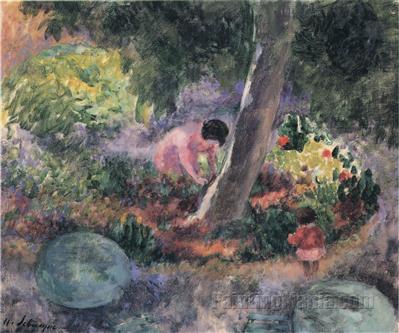
woman-child-garden-180_17722Anna is an only child. She lives with her Dad in an apartment in Carlton. Her life is filled with activities. She plays the cello on a Wednesday afternoon. She does swimming lessons on a Thursday and athletics on Saturday morning. Her Dad comes to athletics and watches. He doesn’t watch in a distracted manner like some of the other parents. Anna’s Dad really watches. He can compare her performance this week to that of weeks past. He would be able to tell her if she did a better job or a worse job than this or that week. He doesn’t. He always tells Anna that she did an amazing job, that she is improving every week.

After athletics he takes her to the store to buy a treat. She is always allowed a treat at the store on a Saturday after athletics. After her treat, Anna and her Dad return to their apartment and change into their work gear. Anna’s Dad has a community garden plot in Flemington, and on a Saturday afternoon Anna and her Dad spend time tending to the plot. Today, she helps with watering the tomatoes and sowing the carrot seeds. She knows that, to grow good carrots, you never buy seedlings. Anna’s Dad can’t understand why so many people buy carrot seedlings. All seedlings will do it run to seed, and their most important root, the one that grows into a carrot, is often bent when people are transferring the seedlings into the vegetable patch. Anna loves the root vegetables, like carrots, the best. Turnips, parsnips, beetroots, potatoes. She loves the anticipation of what lies beneath the soil. The idea that the whole time you are tending, caring, watering the plant, the part that you see is only an indication of what you can expect. Her favourite Saturday afternoons are those when time is spent pulling different vegetables from the ground and inspecting their shape. She loves to feel the wet cold weight of newly upturned roots in her hand. It is her job to arrange all of their collected vegetables into a large cloth bag so that she and her Dad have their veggies at home. She looks forward to the dinner that her Dad will make, with her help, when they get home.

Her Dad always spends too long on a Saturday afternoon in the garden. He is always fiddling with the hoses even as it gets dark. Anna loves the garden, but she doesn’t like spending so many hours there. All the other people leave, and still Anna’s Dad is trellising the beans or thinning the lettuces. She prefers when the other men and women are there, tending their gardens too. There are no other children at the gardens on a Saturday afternoon. Anna knows that lots of adults don’t like children, don’t find their antics cute or amusing, and are much happier pulling out weeds and tending to their prize chillies than listening to stories about school. Because of this, she stays quietly with her Dad, in their plot, unless someone seeks her out. She loves when Mira asks her to help plait her garlic. She spends the afternoon threading the tails of the dry purple bulbs into plaits that Mira can sell. Anna is always allowed to keep a plait, and her father hangs the plait next to the kitchen window. Mira tells her that the plait will keep the vampires away. Anna asks her father about vampires, but his reply is non-committal.

Finally, when the ground under her feet is cold and Anna has started to shiver, it is time to go home. The drive home is quiet, and Anna’s Dad seems almost sad to be driving home. Anna tells him a joke.

“Hey Dad, what’s orange and sounds like a parrot?”

“What? Oh, orange and sounds like a parrot hey?”

“Yeah…Dad, hurry up, what is it?”

“What?….orange you say”

“Dad!”

“Tell me”

“A carrot!”

Anna’s Dad’s eyes crinkle to a half crescent. He laughs. They laugh together and he starts to talk about the meal they will cook. Anna inspects the bag and makes suggestions. Together they decide on a meal and when they get home, it is Anna’s job to find the vegetables from the bag, and collect a clove of garlic from the plait hanging by the window. Together they cook and share stories from their week, and Anna feels warm and safe. She knows that Saturdays are the best day of the week, and that her Dad does his best. She likes that he laughs at her jokes, and tries to think of where she might learn another one- one that will make him laugh and laugh.

Go Back

Reflections on a birth – Claire Weigall

Another brilliant piece from a GUNNAS WRITING MASTERCLASS writer

url-2Here is my baby, fresh from my womb. Her cheeks are swollen and bruised, as purple as waxy plums. Her eyelids are puffy, as if waterlogged. Her dark hair is plastered to her crumpled forehead and her body is slicked with a creamy sludge of vernix. She is the most beautiful thing I have ever seen.

I breathe her in. I kiss her on the temple and hold her to my breast. We are both battered and exhausted. “This is the best”, I beam. The best. The best. A delirious flood of happiness and relief drowns out pain and I barely notice the needle in my thigh; the doctor pressing down hard on my belly; the pull as my placenta is drawn out of me. Her placenta – not mine. In this moment I exist only to nourish and protect my baby. Her umbilical cord, shiny and translucent and thicker than I imagined, connects us still.

In the first moments of her first and only life her wise, grey, been-here-before eyes stare at me knowingly. I want to tell her that the world is not this white, fluorescent place, hard-edged and temperature controlled, with windowless walls keeping nature out. I want to take her home to her brother and sister and the comfort of home. I want to take her outside and see her smile up at the sky. I want to hear her tiny chortle as she delights in the sight of dancing leaves.

She presses her clenched fist into her purple cheek and tries to nuzzle it. I notice the fine fur on her shoulders and wonder how my body could have conjured something so miraculous. Everything has gone well and I know I’m one of the lucky ones. I can’t believe my luck. So lucky. So lucky. I am overwhelmed by pure gratitude and I tell myself I must never forget this.

The midwife is asking me for the spelling of my baby’s new name but my mind is love-barmy and I can’t recall the proper order of the letters – even though her name is something I have pondered for hours, turning it around in my mind, wondering how well it would fit the new being growing inside me, hoping it would please her and somehow make her special. I am staring at her full lips and the profile of her nose. We are imprinting on each other and the world has shrunk in around us.

She is a kilogram, heavier than my other babies were and I can feel that she has more covering on her bones. Although tiny, her body feels robust. I am comforted by her substance, the tangible weight in my arms. Love floods me as she suckles her first milk. I have always loved her. By the time she was conceived I had already loved her for a million years. Now I know why miscarriages are so painful. The doctor presses on my belly, this time making me flinch and protest. She is mine, I think. This is the best. So lucky. So lucky.

What must it have been like for my grandmother? What must it still be like for women in undeveloped countries giving birth without access to medical care? What must it feel like when you can’t keep the baby or when things don’t go to plan? “It doesn’t bear thinking about” says the midwife. I hold my new baby girl and know that I am one of the lucky ones. I can enjoy this moment without fearing I am bleeding to death. I am not too spent to hold my baby and I am confident in her strength; confident she is healthy. I am able to keep her. She is peacefully sleeping now, as though nothing has happened. But she has been born. She is where she belongs.

Go Back

The Feeling of Having Written – Jess McCulloch

Another brilliant piece from a GUNNAS WRITING MASTERCLASS writer

You know, I hate writing about writing.

This time, though, that’s what I’ve got cause that’s what’s on my mind. It’s annoying me though. Why, when set an exercise, did I not launch into some awesome story opener or start where I left off on something else. Why write about writing?!

I think I agree that writing is awful. It’s terrible. It’s hard bloody work. It’s frustrating. There is much self doubt. Why would I want to do it, much less write about the doing of it?

But I cannot stop. I can’t NOT write. I’ve tried. My brain gets very full very quickly and it’s uncomfortable to think. I get grumpy too which is not pleasant for my family.

And there is the feeling of having written. Ah, yes, the calm. The satisfaction of seeing words on a page – in blue – or words on a screen – in black. All is well with the world again when that happens. It inspires me to do more.

More writing would you believe.

More blue and black words.

More more more.

I think then maybe I even breathe better.

But that doesn’t make it any easier. I still have reluctance to pursue something because I’m not sure it’s good. Or maybe i’s because I’m not sure how.

What I’m understanding more though, and what I would tell my own students is

how doesn’t matter right now, JUST DO!

It matters more that an effort has been made than wished for.

The feeling of having written is intoxicating. I need it more often. My family needs me to have it more often. Maybe I even need to write it on a card to stick above my computer. Maybe the whole damn Dorothy Parker quote: “I hate writing, but I love having written.”

Bring me a notebook and a pen!

I am right now wishing I brought my computer along to this class cause now I’m going to have to go home and type it all up while my 4 year old wants to play something and my baby is insistent on having some boob. Right. Now. Then it’s bath time, and bedtime.

But, you know, I’ve got a deadline and fuck it, I’m going to meet it, and then it’ll go a bit like:

“Well, hello Deadline. Didn’t think you’d see me here, did you?”

The Deadline will reply “Oh, I never really doubted you.”

But we’ll both know that’s a lie and we’ll laugh and laugh and I’ll be all like “Take that!” and this will be published, even though it is a piece about writing and I hate writing about writing, but now that’s it’s written and submitted, well, you know, that intoxicating feeling is doing it’s thing.

Go Back

A Treatise on Grandmothers – Marg D’Arcy

Another brilliant piece from a GUNNAS WRITING MASTERCLASS writer

url-1I am sure you have all seen it, the headline that says ‘Grandmother bashed in her house’ or ‘Grandmother arrested for carrying drugs through airport in Thailand’.  Well, I am a grandmother, but you know what, I don’t get it.  I don’t get why it’s important to tell us that someone is a grandmother in a headline like that.  Does it mean they are more worthy of compassion?  Does it mean that they are therefore a bit old and senile so you wouldn’t expect them to have the brainpower to manage to smuggle drugs?  Or that it’s no surprise when they get caught because obviously their brain is a bit frazzled because of grandmotherhood.

Yep I am a grandmother, and I love it.  My grandchildren have each from day one, got their claws into my heart and embedded themselves deeply into my soul.  They give me joy and they magnify any fears I have for the future of the world because I don’t want them to have to deal with the damage we seem to be hellbent on wreaking on this tiny planet we inhabit.  But I don’t want to be defined as a grandmother.  I am a woman with a history, an atheist, an activist, a feminist  . I have worked to change the world, I have worked to make our community just a little bit safer for women and children.  I have loved good and bad men, I have travelled, I have at times had too much to eat and too much to drink.  I dance, I laugh, I tell stories, I am rude, I am kind and I am at times quite cruel.

I hate those flowery cards and sentiments that say things like ‘best grandmother ever’.  I hate those shallow quotes that say grandmothers make the world go around, that they are always there when you need them, or they are wise or spread kindness and compassion.  In the end grandmothers are just women.  Women who have had (in my case the incredibly fortunate) experience of giving birth and whose children have survived long enough and healthy enough to have their own children.  Being a grandmother does not automatically make you wise, or saintly or a source of overflowing goodness.  In some cases women have not wanted or known how to care for their own children, are able to love, celebrate and care for their grandchildren.  Others never learn to care for themselves let alone anyone else.  Grandmothers both carry the sins of past generations and hand them down to the future ones if they are allowed to.

Not all grandmothers are there all the time.  Some of them want their own space, some work and love it, (or hate it but need the money) some want to have a life and not be forever available to give and give and give again.  Some do choose to do that, or feel pressured into it by their ever so loving children and grandchildren.  I know that I am a pretty good person, but not because I am a grandmother.  I am a good person because I care about the world, because I intensely dislike those parasites like Tony Abbott and Cory Bernardi who want to drag us back to the last century.  It’s my values and the things I have done that define my goodness and worth, not my status as a grandmother.  I know my grandchildren are fortunate to have me in their lives, not because I am inherently kind or good, but because having me around allows them to know their past.  Somebody, no idea who, once said that we need to know and acknowledge our past to shape our present and our future.  So that’s what I give them, a knowledge of who they are and where they come from.  Those who have been denied that connection, like the stolen generation or orphans or those who have not had families that cared for them, tell us what an aching hole not having that history, that connection to the past that understanding of where they came from, can leave.


Maybe that’s why grandmothers are either celebrated or sniggered at.  Maybe it’s because we provide that connection to what has gone before which some people value and some don’t.  But just think, if we celebrated and included all older people and spent time listening to them, to their stories to their histories then grandparents would be just another part of that.  If, as a community, we embraced all children and all older people, whether you were or were not a parent or grandparent would not matter.  What would matter would be your memory, your history, the knowledge you have accumulated over the years and the connections you have to your community.

So, next time you read those headlines, or you see the cards or somebody posts something on facebook about grandmothers, just think that there is a whole history there that is more than that.  Just think that there is a woman who has a life and who has lived it well or not but that she is more than just a grandmother and is not deserving of either sainthood or scorn just because she carries that label.  Be curious instead about what her life might be or have been like.


Go Back

Peter Is My Uncle… Or Was My Uncle – Scarlet Daly

Another brilliant piece from a GUNNAS WRITING MASTERCLASS writer

CatherineDeveny_Gunnas_BradenStutchberyPeter is my uncle… or was my uncle.  I can’t really tell you if he was or is… that’s the hard thing.  He went missing before I was born and before my sisters were born.  In fact, he went missing when my mother was pregnant with her first child 30 years ago; my eldest sister.  Mum has never ever told or showed me truly how this has affected her.  She has always kept my sisters and I at arms-length by telling us that she believed Peter was dead.  Maybe this was her way of shutting down any questions we may have had, or even questions that she herself had about his disappearance.  Maybe in her mind, she needed to block out the “what if’s” and the perpetual cycle of scenarios playing over and over again. I haven’t yet fathomed just how difficult that must have been for her… to have one little life growing inside of her and the juxtaposition of another taken away from her.

There was darkness in Peter’s life.  He suffered from mental illness, just like myself.  Nobody knows exactly what form of mental illness he suffered from, as there was no actual diagnosis that was made.  He could have been suffering from depression, bipolar disorder, anxiety or schizophrenia… we just don’t know.  We don’t know if he wanted to commit suicide or how much he was suffering internally with his thoughts and feelings.  Maybe he left to start a new life, away from the boundaries he faced in his home life and in society.  Maybe there were pressures coming from his parents on how he, as their Greek son and first child, should be living his life.  Did he struggle the same way that I do?  Trying to meet parents’ expectations only to feel as though you are failing dismally?

Around the time that Peter went missing, he wasn’t doing so great.  He was unwell; so much so, that he was hospitalized.  It was when he returned home from hospital to live in the bungalow of his parent’s house that he started becoming reclusive and slipped away from family and friends.  Mum says that it was a good six months in which he didn’t come out to see her or my Dad when they visited.  She recalls leaving a John Lennon book out the front of his bedroom door for him to read.

Mum only recently told me that the last time she saw Peter was when she and my Dad were at her parent’s house.  Peter had told his parents that he was going away for a few days and was in his car to leave.  Mum just missed him because as she looked out the window from inside their home she saw Peter drive away in his Volkswagen.  That was the last time that she saw him.  His car was later found abandoned.  A friend of Peter’s saw him on a train and spoke with him some time after he became a missing person.  I don’t know exactly how much time had lapsed, but this girl friend had a general chat with him, completely oblivious to the fact he was deemed officially missing. We know of no other sightings past this time.

I recently started making some connections between Peter and I; Peter studied to be a teacher, and funnily enough, I fell into teaching too.  We both studied Education at La Trobe University and it seems we both have the same love for literature.  His vast collection can be found in the back room of my grandma’s house and I always feel drawn to him when I am there.  The first time that I felt drawn was when I saw that he had a collection of Chekhov plays- my favourite playwright!  The second, was just a few months ago when I had just discovered a love for D.H. Lawrence.  I found myself looking through Peter’s collection again and learnt that he too had some of Lawrence’s work.  I felt a rush of tightness in my gut, for I was realising a very deep sadness that was being brought to the surface.

I can finally identify this now as grief.  It was the grief of never knowing my uncle. It was the grief of losing a piece of my history; my uncle who I would desperately love to have known.  The family member who I was strangely feeling very connected to and wondered if he was the one I had longed for all along… the one who would understand my challenges as an artist, a writer, a sensitive soul…the one who would relate to my inner demons and struggles and who would share with me his wisdom of living through it.  I wish I knew if he did make it through.


Go Back